

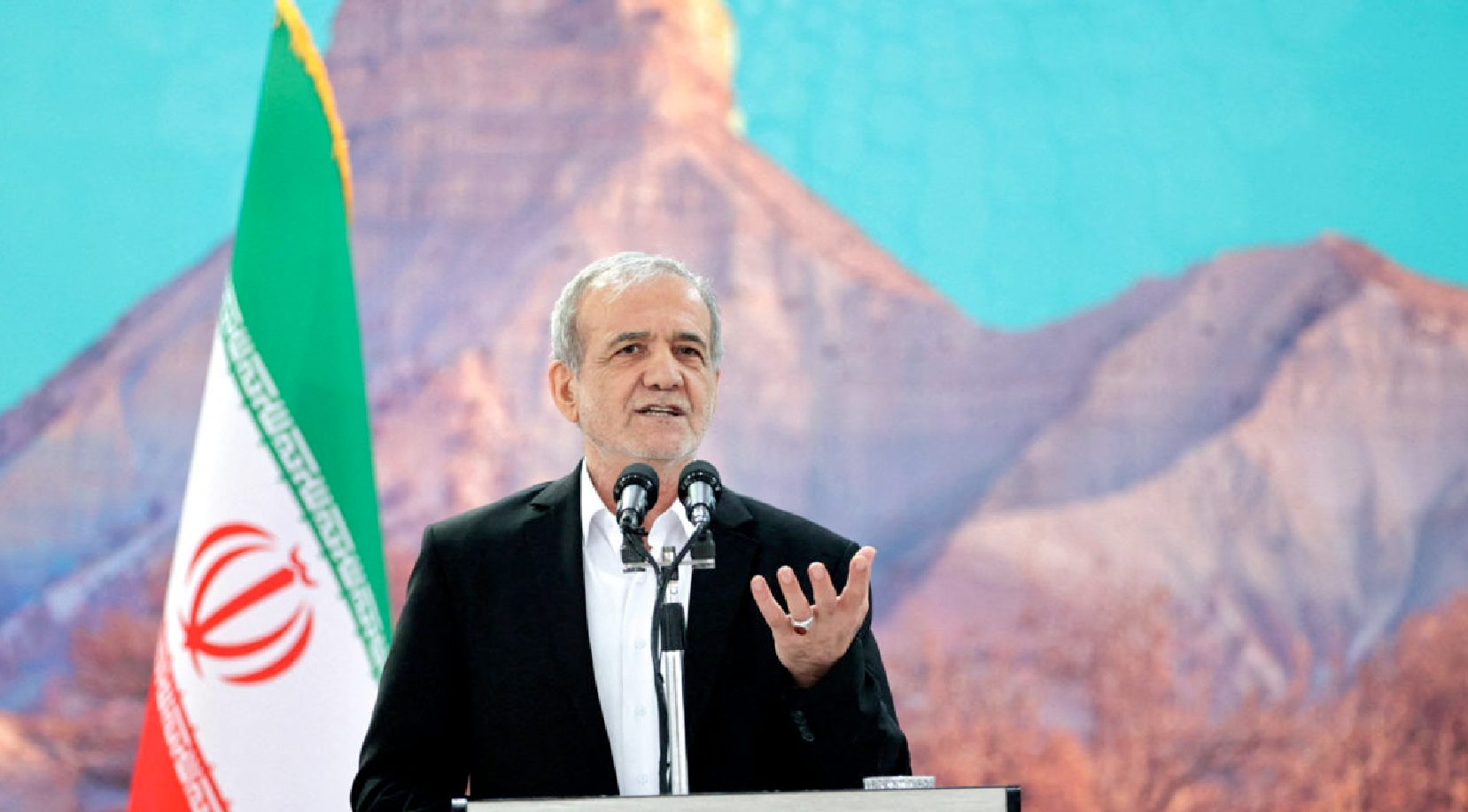
(ZENIT News / Rome, 05.18.2026).- As war, fragile ceasefires, and competing narratives continue to define the Middle East, the Vatican once again finds itself at a familiar crossroads: exercising moral influence without becoming a political actor. That delicate balance has re-emerged after Iranian President Masoud Pezeshkian sent a letter to Pope Leo XIV calling on the international community to resist what he described as Washington’s “illegal demands” and praising the Pope’s recent positions regarding military escalation in the region.
The communication, reported by Iranian media, presents Tehran’s reading of recent events while simultaneously attempting to place the Holy See within a broader moral conversation about war, justice, and international order.
According to the contents of the letter, Pezeshkian accused Israel and the United States of carrying out actions that he described as responsible for thousands of casualties and widespread destruction. He claimed that the conflict had resulted in the deaths of major political and military figures as well as 3,468 citizens, while also causing severe damage to schools, universities, hospitals, places of worship, and public infrastructure.
Drawing upon both Quranic and biblical references condemning arrogance and abuse of power, the Iranian president praised what he called the Pope’s “moral, logical and just positions” concerning the conflict. The language appears carefully chosen. Tehran is not merely addressing the head of the Catholic Church; it is speaking to one of the world’s most visible moral authorities, whose words often resonate far beyond Catholic circles.
The appeal also sought to frame Iran’s international posture as a defense of law rather than a challenge to it. Pezeshkian insisted that Iran had not threatened neighboring countries and argued that military responses against interests connected to alleged aggressors were acts of legitimate self-defense. He also addressed concerns surrounding the Strait of Hormuz, one of the world’s most strategically important maritime passages, claiming that current insecurity in the area is a direct consequence of military actions and blockades rather than Iranian policy itself.
The Iranian president concluded by reaffirming a commitment to diplomacy, including dialogue initiatives reportedly mediated by Pakistan, while calling for what he described as a more realistic and equitable international response.
Yet the broader context surrounding these statements remains highly complex.
The Vatican traditionally maintains channels of communication with governments across ideological and geopolitical divides, including states with which it has profound disagreements on issues involving human dignity, religious liberty, or human rights. That strategy has often reflected a long-standing conviction of the Holy See: dialogue is not the same as endorsement.
For decades, Vatican diplomacy has sought to preserve spaces for encounter even in moments when political relations appear frozen. Historically, popes have often engaged with governments that stood far from Catholic social teaching because the Holy See sees communication itself as a means of preventing further human suffering.
Meanwhile, events on the ground continue to evolve rapidly.
On the same day that diplomatic discussions advanced, violence persisted elsewhere in the region. An Israeli airstrike on a town in southern Lebanon reportedly killed six people, including three paramedics, underscoring the fragile reality behind diplomatic announcements.
At the same time, Lebanon and Israel signed a 45-day extension of their already unstable ceasefire agreement in Washington, with the United States acting as mediator after two days of negotiations. The extension reflects a recurring Middle Eastern pattern: military confrontations may temporarily pause, but political and security tensions often remain unresolved beneath the surface.
Political movements within the Palestinian territories are also undergoing significant developments. Leaders of Fatah gathered for internal meetings intended to select the movement’s highest decision-making body, marking the first conference of its kind in a decade. Palestinian President Mahmoud Abbas, now 90 and governing largely through decree, was recently re-elected as head of the movement.
Against this shifting landscape, Pope Leo XIV continues to emphasize themes that have characterized much of the Holy See’s approach to international crises: the rejection of war as a solution, the defense of human dignity, and the insistence that peace requires more than military calculations.
What remains uncertain is how governments interpret those words.
Political leaders frequently seek moral legitimacy for their own narratives, especially during conflict. Yet papal appeals generally operate according to a different logic. Their purpose is rarely to strengthen one side against another; rather, they attempt to recall principles that transcend national interests: the value of every human life, the protection of civilians, respect for conscience, and the pursuit of peace rooted in justice.
In times of war, that distinction often becomes difficult to preserve. It may also become more important than ever.
Thank you for reading our content. If you would like to receive ZENIT’s daily e-mail news, you can subscribe for free through this link.

Publicaciones relacionadas:
 Why didn’t the Pope pray in a Turkish mosque? Trump, Ukraine, and Pope Leo XIV’s next residence
 Leo XIV, Putin’s rejection of the Christmas truce, and disappointment with the Democratic governor of Illinois
 Pope Leo XIV and his impressive and comprehensive reflection on our times, troubled by a growing number of tensions and conflicts
 Taiwan’s president writes to Pope Leo XIV: ‘Taipei wants peace, human rights, and democracy’
