

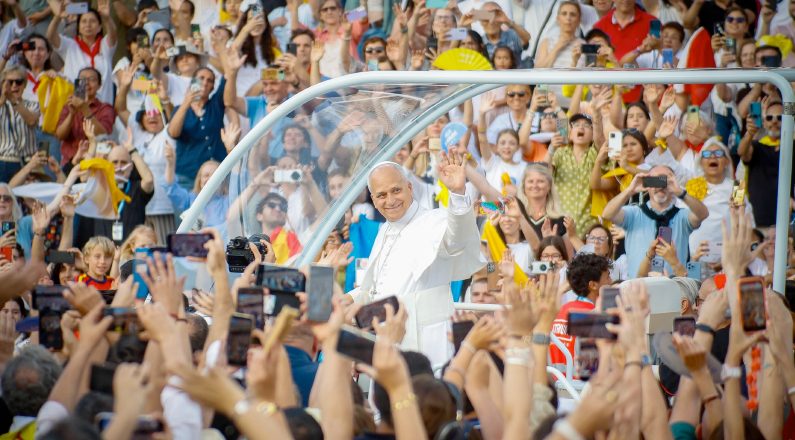
(ZENIT News / Madri). – His Holiness LeoXIV’s Apostolic Journey to Spain concluded on Friday, June 12, with Holy Mass celebrated in the port of Santa Cruz de Tenerife, transformed into an altar facing the ocean. Following the farewell ceremony at the airport, after an incident with the main aircraft was resolved, the Pope began his return journey to Rome.
In its initial assessment, the National Committee believes that the Pope’s visit has ignited a wave of hope in Spanish society. This apostolic and social success is a testament to the strength of the Holy Father, the depth of his messages, and the millions of people who took to the streets and filled the venues. Over the next few days, the Committee will provide more information and a detailed evaluation of the entire visit.
In the words of the President of the Spanish Episcopal Conference, Archbishop Luis Argüello, the Pope offered «a Catholic perspective, namely, a comprehensive perspective» in the face of the complexity of the reality and its problems.
A Journey of Firsts
The Journey was marked by milestones that set a precedent in the history of papal visits to Spain. For the first time, a Pope addressed the Spanish Parliament and celebrated Corpus Christi in Spain; also for the first time, a Pontiff visited a Spanish prison and the Canary Islands.
The Figures of the Journey
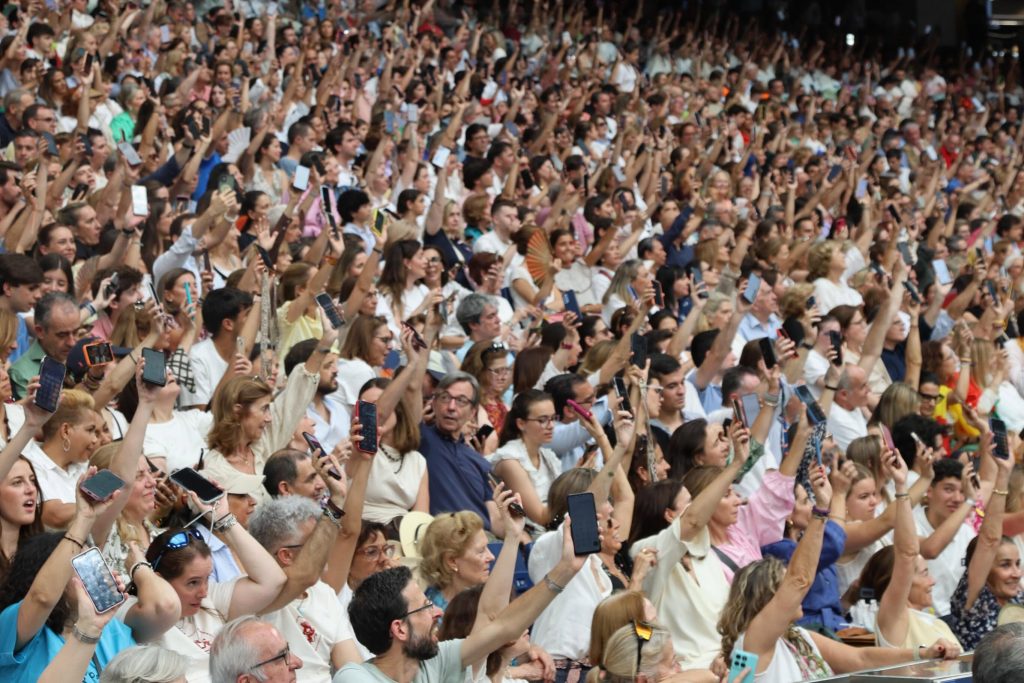
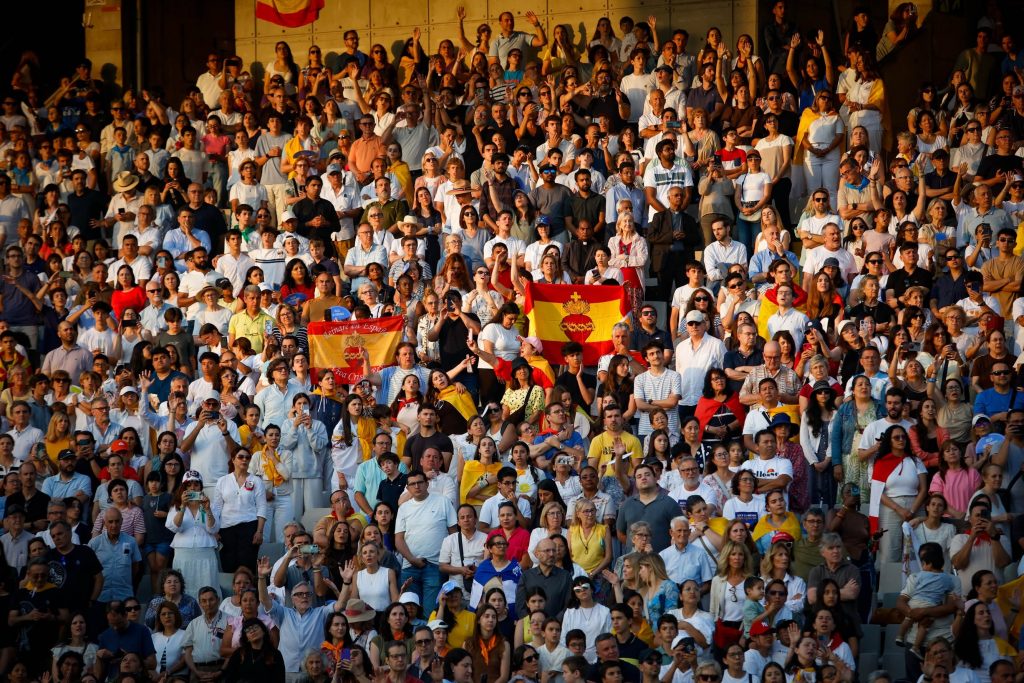
According to the initial figures from the National Committee, more than 2.5 million people participated in the 21 events of the program throughout the four stages of the Journey. In Madrid, 1.5 million faithful filled Plaza de Lima and more than 70,000 people gathered at the Santiago Bernabéu Stadium; in Barcelona, around 40,000 people filled the Montjuïc Olympic Stadium during the Prayer Vigil, on the eve of the day that the city poured out around the Sagrada Familia; in Gran Canaria, another 40,000 approximately attended the Stadium Mass after the encounter with the refugees at the Arguineguín dock, and in Tenerife, more than 35,000 faithful transformed the town of Santa Cruz into the altar for the final Mass of the Pope’s Journey, in addition to the tens of thousands of people who attended each of the Popemobile’s routes.
In six days, the Holy Father traveled more than 2,500 kilometers, completed the 21 events of the program and made 23 interventions, including those made on board the papal plane, before a media coverage that has brought together more than 5,000 accredited journalists.
Regarding viewership, according to the consulting firm Barlovento, in Spain alone, 28 channels broadcast special programs, reaching 18.8 million unique viewers, representing 39.6% of the Spanish population. These figures do not include international coverage and social media reach. The security operation mobilized approximately 25,400 officers from the State Security Forces, along with some 2,000 personnel and dozens of emergency and healthcare teams, while more than 25,000 volunteers assisted the pilgrims throughout the week. The pilgrimage proceeded without incident, despite heightened anti-terrorism alerts, thanks to the exemplary behaviour and civic-mindedness of the pilgrims. of all Spaniards. And the organization expresses its deepest gratitude for the extraordinary work carried out by the security forces and emergency services.
A Magisterial Teaching That Challenges All of Society
During these days, Leo XIV spoke of faith and also of concrete wounds, from loneliness, mental health, and poverty to prison, migration, and the dignity of work, with a teaching that grew stage by stage to outline a comprehensive message addressed to believers and non-believers alike.
The Madrid leg of his visit focused on the social and institutional life of the country. In his first speech in Spain, on June 6, the Pope asked for a choice “of clarity that illuminates and frankness that opens paths”; that same day, at the CEDIA 24-hour shelter, he reminded everyone that “charity admits no delays,” and that evening, before the young people gathered in Plaza de Lima, he asked them to be “a spark of a new humanity” with an exhortation that resonated around the world: Be human! Men and women of flesh and blood. Not appearances, but trustworthy faces.” At the «Weaving Networks» meeting at the Madrid Arena, with representatives from culture, economics, and academia, he affirmed that «the Church longs to remain in dialogue with the contemporary world»; in his address to the Spanish Parliament, he defended the dignity of the human being in the face of life’s challenges, new technologies, and social coexistence; before the Virgin of Almudena, he maintained that «to build something new, we must tear down the walls,» and at the Santiago Bernabéu Stadium, he recalled that «the kindness of a few can overcome the fear of many.»
Barcelona provided the most profound dimension of the Jouney. At the Prayer Vigil in the Montjuic Olympic Stadium, the Pope pierced the soul’s darkness with a cry of hope: «God does not abandon us!»; at Brians 1 prison, where he listened to the testimonies of two women deprived of their freedom, he assured the inmates that «the past does not condemn the future» and uttered one of the most memorable phrases of the Journey: «God loves you as you are, but dreams of you better!» In Montserrat, within the framework of the monastery’s millennium, he invited them to leave at the feet of the Virgin «the armor that has gradually hardened our hearts»; before the charitable organizations gathered in the church of San Agustin, he asked that we not become hermits «that solitude and abandonment become normalized in life,» and at the Sagrada Familia, where he inaugurated the Tower of Jesus Christ on the centenary of Gaudí’s death, he defined the Basilica as «an eloquent catechesis made of stones, colors, and light.»
The Canary Islands raised the voice of the Journey to the world. On the dock of Arguineguín, faced with the realities of welcoming migrants on the Atlantic route, the Holy Father posed the question that summarizes his visit to the Islands: «Each boat that arrives brings not only migrants; it brings with it a question: What kind of world have we built, if so many brothers and sisters have to risk death to seek life?» To the priests, religious, and pastoral agents of the archipelago, he asked that, «when they encounter difficulties, they lift up their gaze»; at the Mass in the Gran Canaria Stadium, he proclaimed that «we are the living presence of the Lord in the world, let us be bearers of His mercy and of His peace”; at the Las Raíces center in Tenerife, after listening to the testimony of several migrants, he affirmed that “God’s love knows no borders” and called for learning “the language of closeness,” and at the final Mass in the port of Santa Cruz, he bid farewell with gratitude: “Thank you for who you are and for what you do, making this Island a place where one can find the Heart of Christ.”
“Now it is your turn to work,” the Pope told the President of the Spanish Episcopal Conference, Monsignor Luis Argüello. “To transform emotion into virtue, emotion into work.”
A Collaborative Journey
The National Committee highlighted the collaborative nature of an organization sustained by the Holy See, the Spanish Episcopal Conference, the Royal Household, the Government, the autonomous communities, the city councils, and the dioceses, and expressed its gratitude for the coordination of all the Public Administrations that were supportive from the very beginning.
Each stage left its own unique mark, from the Corpus Christi procession in Madrid and the overflowing Cibeles fountain to the port of Santa Cruz transformed into an altar facing the ocean, passing through the millennium of Montserrat, the Sagrada Familia illuminated on Gaudí’s centenary, the Arguineguín dock and the Atlantic memory of Gran Canaria, or the harsh reality of migration in Las Raíces, Tenerife.
The Committee also wished to thank the journalists, photojournalists, and camera operators who made the news coverage of the Journey possible.
Next Steps
The National Committee will convene a press conference next week with a detailed report on the Journey. As announced last February, an audit and an economic impact report of the entire visit will also be prepared and made available to the media.
Under the invitation to raise our gaze, which has given its name to the anthem and the official bell of the Journey, Leo XIV left in Spain the imprint of words that challenge all of society, believers or not, and that invite us to look beyond particular interests, towards coexistence, welcome, and hope.

Publicaciones relacionadas:
 Why is he called Leo XIV? The official answer given by the Pope
 “Only informed individuals peoples can make free decisions”: Leo XIV’s full speech to journalists
 Pope Leo XIV, Father Dowling, and China
 Leo XIV will go to Turkey at the end of 2025. Patriarch of Constantinople confirms it after audience
