

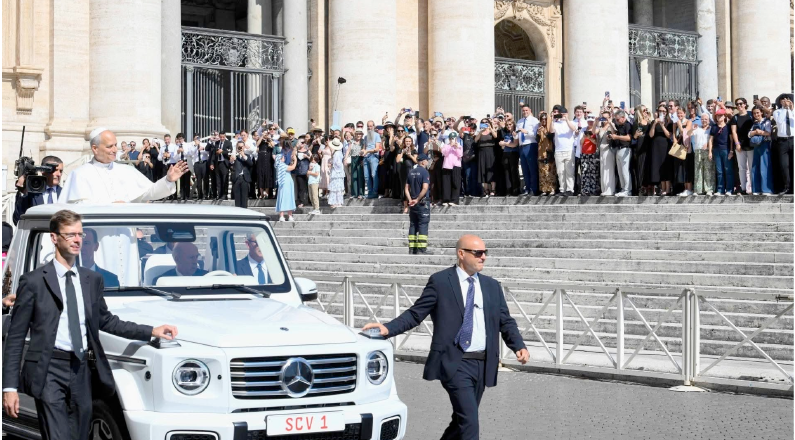
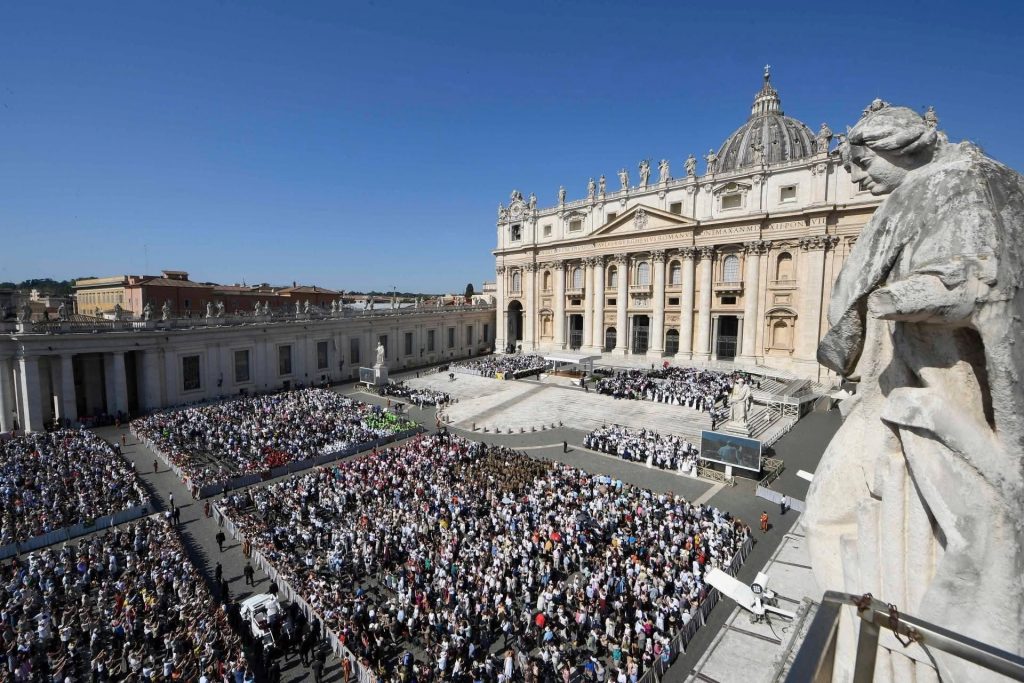
(ZENIT News / Vatican City, 06.17.2026).- On Wednesday, June 17, the Holy Father held his traditional general audience in St. Peter’s Square before thousands of pilgrims gathered there. After touring the avenues of the square in the popemobile, Leo XIV delivered his weekly catechesis, which on this occasion was devoted to recounting his own experience of his recent visit to Madrid, Barcelona, and the Canary Islands. Below is the English translation of the Supreme Pontiff’s remarks:
***
Dear brothers and sisters, good morning and welcome!
Today, I would like to share some reflections on the Apostolic Journey I made last week to Spain, visiting Madrid, Barcelona, the Abbey of Montserrat and the Canary Islands.
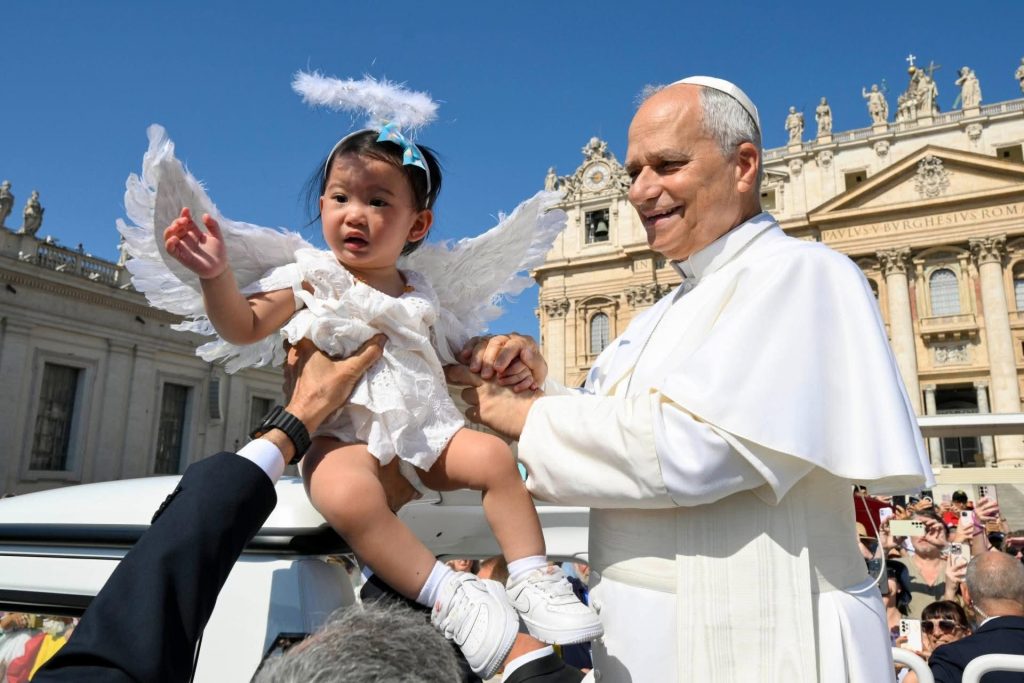
After the long Journey in four African countries, this time I found myself immersed in a European country with an ancient and very rich Catholic tradition. And it appeared evident that today in Spain, which has experienced significant social and cultural changes, the Pope was welcomed everywhere with enthusiasm and readiness to listen. For this I give thanks to God and to the entire Spanish people, the King and the civil Authorities, the Bishops and the ecclesial communities.
The people of God gave me great comfort through the joyful expression of their faith and affection. For my part, I confirmed the faithful and, as Bishop of Rome, I encouraged them to overcome every form of division and conflict by always promoting communion, dialogue and unity in diversity. This is the very service of the Successor of Peter, a service which finds a specific expression in Apostolic Journeys, each time adapted to the ecclesial and social situations of the countries visited.
With regard to Spain, I was able to observe with joy that people of all ages and situations had been looking forward to the Pope’s visit. I found multitudes [of people] everywhere, who welcomed me with great warmth. This was not something that was taken for granted, and is worthy of reflection. Naturally such participation expresses, first of all, as I said, the faith of the Spanish people. At the same time, I believe it reveals a widespread need to find unity based on a true and deep foundation, one that is neither ideological nor based on partial interests — a foundation which, ultimately, can only be ensured by Christ, and is conveyed in the lives of people by the Gospel, through the necessary “inculturation”. It can do so because its message fully responds to both these needs: the search for truth and the thirst for justice.
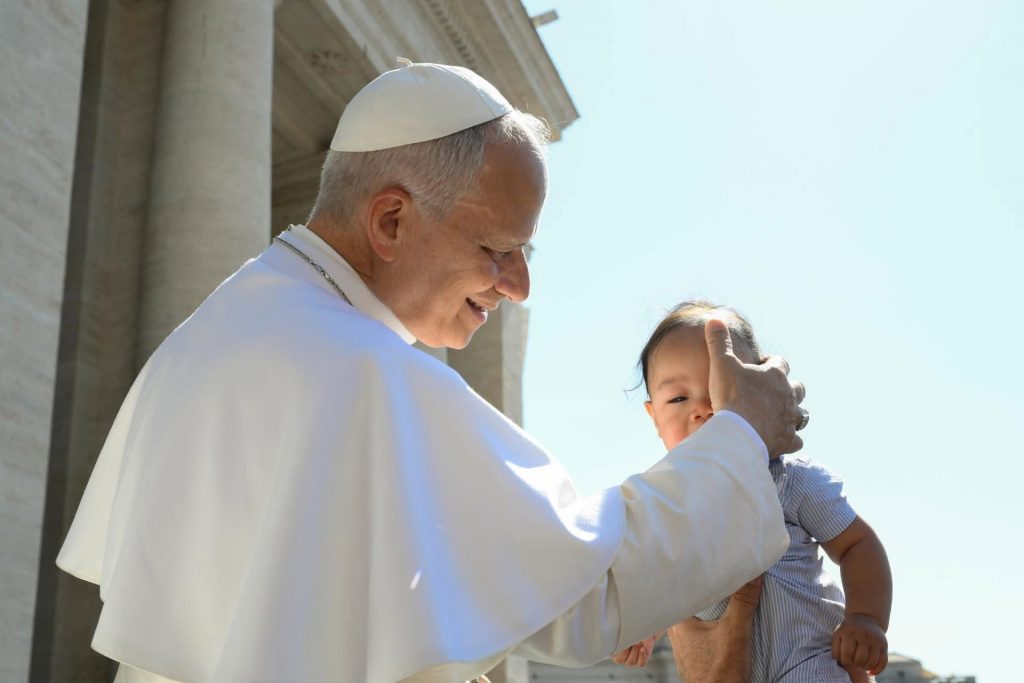
In Madrid and Barcelona, we gathered in the great Cathedral as well as in modern stadiums. We prayed the holy Rosary at the Abbey of Montserrat. We celebrated [Mass] at the Sagrada Família — a majestic symbol, a symphony of stones and light that speaks to everyone of the Christian mystery. This encounter of ancient and modern, Catholic tradition and contemporary culture enabled me to perceive first-hand the very character of Europe, its inestimable wealth, as a living reality, not a thing of the past. It is a heritage to be safeguarded with care, so that it may be invested in today’s global world with its momentous challenges: peace, integral ecology, equitable and sustainable development, and respect for human dignity. They are challenges that the Second Vatican Council had already clearly recognized, and to which the subsequent Magisterium returned, up to my recent Encyclical, Magnifica Humanitas, which aims to safeguard the human person in the time of artificial intelligence.
Through the various meetings, I sensed a need to hear from the Pope’s voice, the Gospel of hope for today’s humanity, which is sorely tried by the negative consequences of a deceptive model of development. I recognized this need, which found expression in the many testimonies I was able to listen to — testimonies that were sometimes moving, sometimes edifying — also and above all in the faces of the little ones and the poor whom I met: the child who read his letter to me in the parish; some victims of abuse, who ask to be heard; the inmates who were waiting for me in the prison; the young people filled with anxiety and aspirations; the migrants in the reception centres in the Canary Islands.
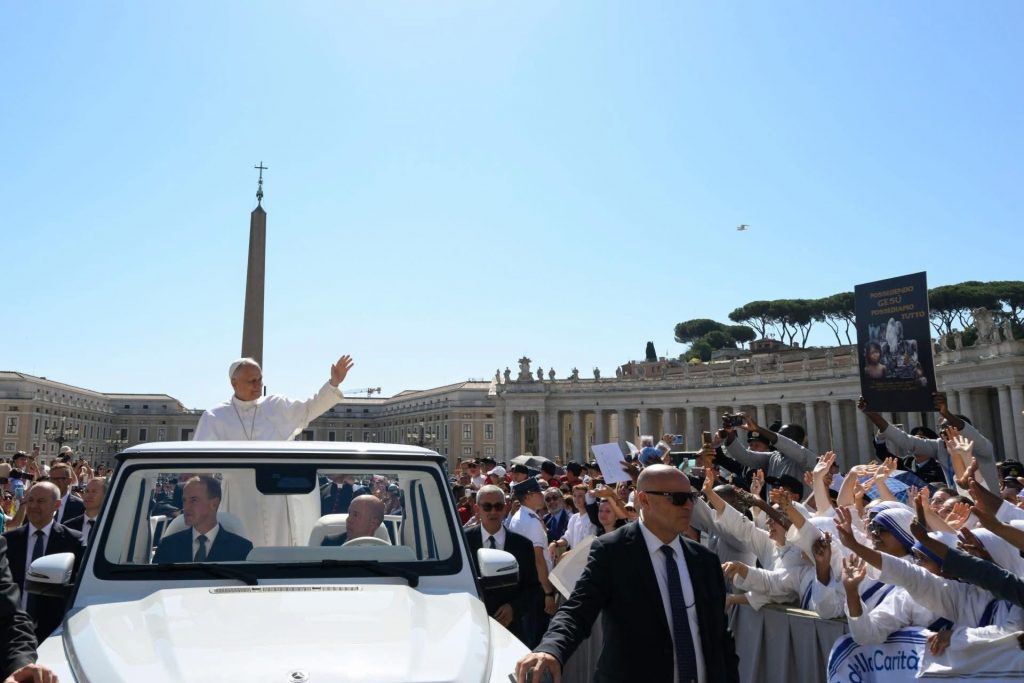
It was precisely there, in the Canary Islands — the final stop of the Journey — that I was offered a comprehensive insight. It was offered to me, on the one hand, by the very geographical location of that archipelago; and, on the other, by the reality of a local Church which welcomes a large number of forced migrants, mainly from Africa. We know that the migration phenomenon is complex and requires organic and coordinated action plans. But this interpretation opens up a different, broader perspective: it enables us to understand how we are called to reread the Gospel in today’s world, exchanging the gifts of our respective cultures with each other, and in particular, the results produced in them by the fruitfulness of Christ’s message. And one of these fruits is precisely dialogue between people and between peoples, an encounter in the spirit of fraternity, which enables us to discover and appreciate one another’s values. This journey is not easy. It requires goodwill and God’s help, but it is the path that leads to the civilization of love.
Dear brothers and sisters, the motto of this Apostolic Journey was “Alzad la mirada”, “Lift up your gaze!” (cf. Jn 4:35). Jesus addressed these words to his first disciples, to teach them to see the desire for life, truth and fullness in people and in the crowds. The Lord repeats those words to me first, and by his grace I also experienced them during this Journey. Today, I would like to share this invitation with you: let us lift up our gaze! Let us learn from Jesus to look at our neighbour, at people and at the world, “through God’s eyes”, that is, with love, respect and compassion.
Finally, I want to thank all those who prayed for the success of this Apostolic Journey, especially the contemplative nuns, who, thanks be to God, are very numerous in Spain. Continue to pray, so that, by the intercession of the Virgin Mary, the seeds I scattered may bear abundant fruit. Thank you!
Thank you for reading our content. If you would like to receive ZENIT’s daily e-mail news, you can subscribe for free through this link.

Publicaciones relacionadas:
 The difference between illusions and preparations: a catechesis by Pope Leo XIV applied to the Eucharist
 The invisible saving action of Jesus: catechesis by Pope Leo XIV
 What is the relationship between Sacred Scripture and Tradition? Pope Leo XIV responds
 In what sense is the Bible the Word of God in human words? Pope Leo XIV responds
