

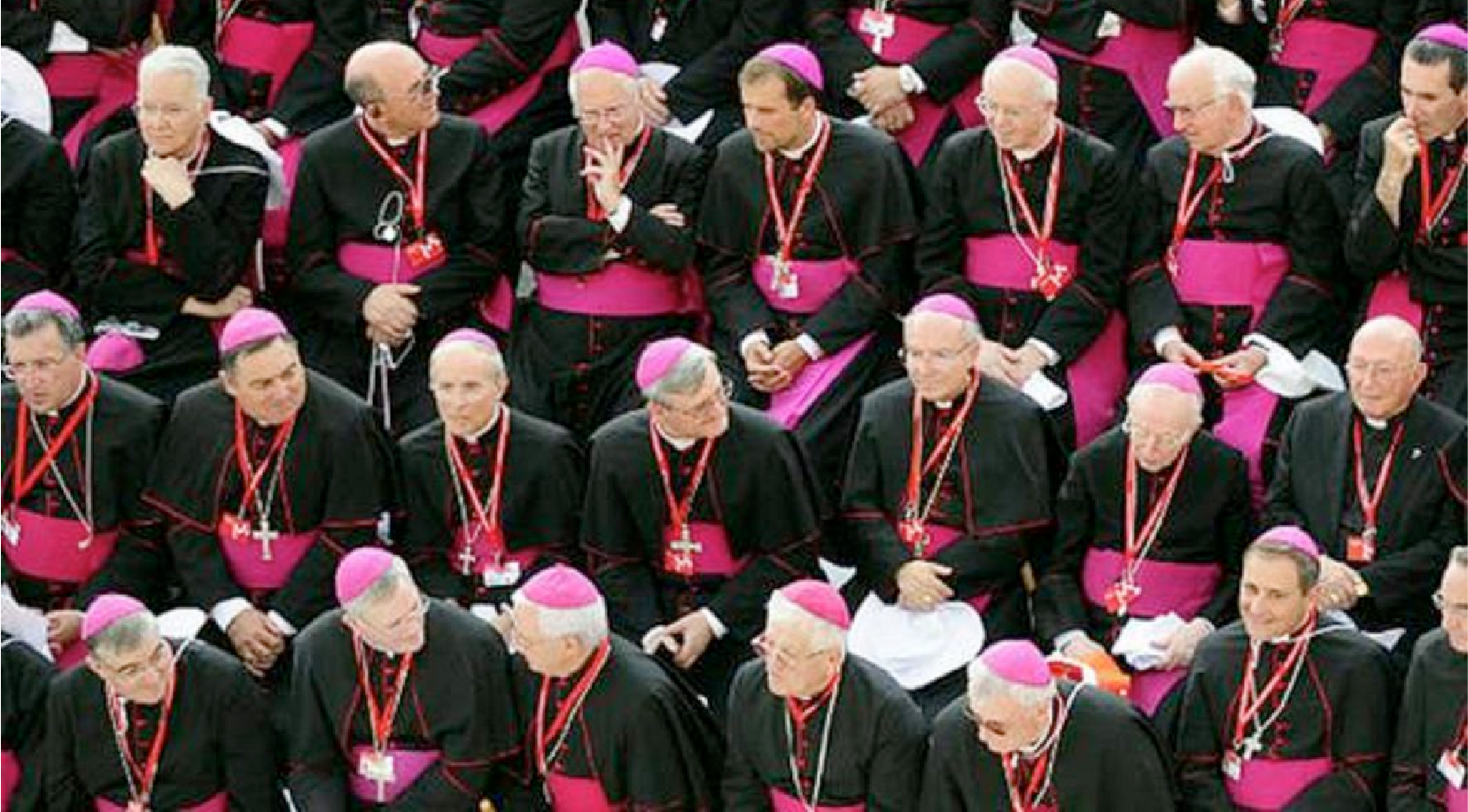
(ZENIT News / Washington, 05.02.2026).-In two separate developments, Vatican dicasteries have recently stepped into contentious ecclesial disputes in the United States. One case centers on liturgical restrictions imposed by a bishop in North Carolina; the other involves the financial obligations of parishes in a major New York diocese grappling with the legacy of clerical abuse.
Together, they offer a snapshot of a Church navigating difficult terrain: to safeguard doctrinal and liturgical integrity while ensuring fairness, accountability, and pastoral sensitivity in administrative decisions.
In the Diocese of Charlotte, North Carolina, a formal appeal has reached the Vatican’s Dicastery for Divine Worship and the Discipline of the Sacraments regarding the actions of Bishop Michael Martin, a Conventual Franciscan appointed in 2024. According to a letter dated February 16, the dicastery acknowledged receiving a complaint alleging that the bishop had failed to respond adequately to requests concerning liturgical matters. The case has been registered under protocol number 369/25 and is now under examination.
The appeal emerges from a broader context of controversy. In 2025, Bishop Martin ordered the cessation of the Traditional Latin Mass in the four remaining parishes where it was celebrated, relocating it to a single site: a former Protestant chapel situated 45 to 60 minutes from Charlotte. The facility, renovated at a cost of $700,000, has been acknowledged by the bishop himself as insufficient to accommodate all faithful previously attending the liturgy. For many, participation now entails round trips of up to two hours.
Further measures intensified concerns among clergy and laity alike. Reports indicate that diocesan directives included the removal of altar rails and kneelers, as well as experimental changes in school liturgies, such as the introduction of projection screens and student extraordinary ministers of Holy Communion—practices that some argue diverge from established liturgical norms.
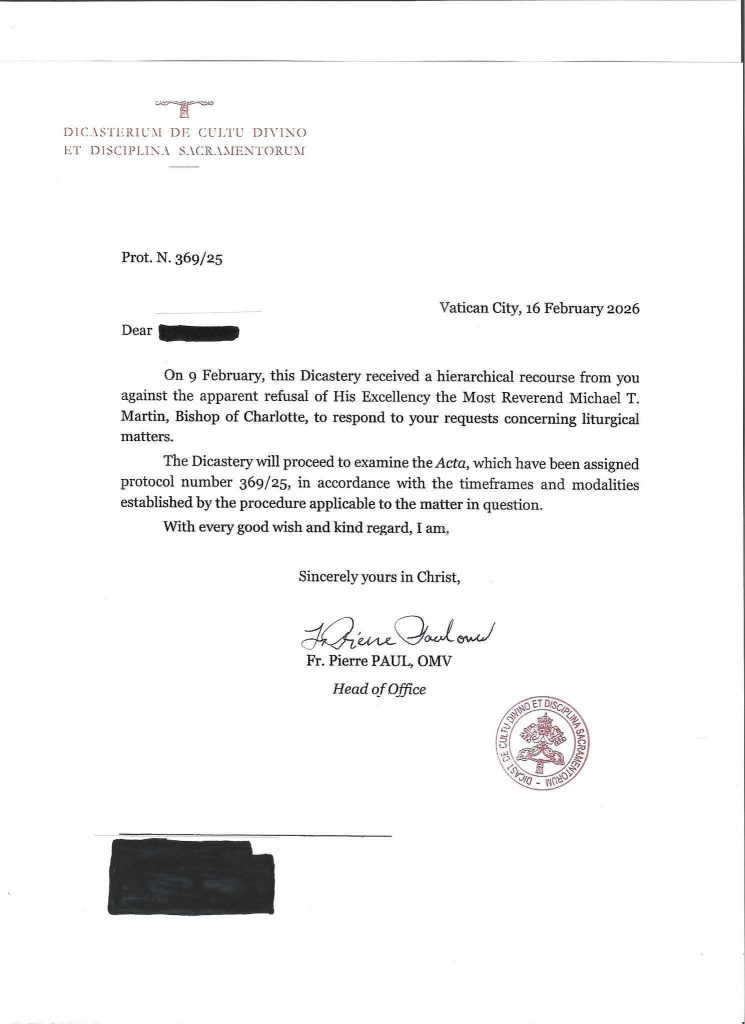
In January, approximately 30 priests—around 40 percent of the diocesan clergy—filed a separate objection with the Dicastery for Legislative Texts, challenging the suppression of traditional liturgical elements. Earlier drafts of diocesan guidelines, later described as provisional, had proposed sweeping restrictions, including limits on the use of Latin, the celebration of Mass ad orientem, and even traditional vestments and devotional practices.
This unfolding situation reflects a deeper ecclesial question: how to interpret and implement liturgical reform in continuity with tradition. While recent years have seen increased regulation of the Traditional Latin Mass under Pope Francis’ motu proprio Traditionis Custodes, surveys suggest that many Catholics—especially younger ones—are drawn to more reverent forms of worship, including kneeling for Communion.
Meanwhile, in the Diocese of Buffalo, New York, a different kind of appeal has yielded a decisive outcome. The Vatican’s Dicastery for the Clergy has overturned several financial decrees issued by Bishop Michael Fisher as part of the diocese’s “Road to Renewal” restructuring plan.
The plan, launched in 2024, envisioned the closure or merger of roughly one-third of the diocese’s parishes, citing priest shortages and declining attendance. As part of a broader effort to fund a abuse compensation settlement, parishes were assigned significant financial contributions, even in cases where they faced closure.
Eight parish groups that challenged these assessments have now received notification that the Vatican found the decrees lacking a basis in canon law. According to advocacy group Save Our Buffalo Churches, the Holy See cited both procedural deficiencies and the methods used to determine the financial obligations.
The diocese, for its part, has emphasized that the Vatican’s rulings apply only to the specific cases under appeal and do not alter the overall compensation plan. It also clarified that no parish funds had yet been transferred, as contributions were being held in segregated accounts pending final disbursement.
Earlier this year, Bishop Fisher committed an additional $10 million from diocesan resources to the settlement fund and adjusted contribution levels for some parishes. He has publicly affirmed his intention to comply fully with Vatican directives, even as the broader restructuring effort continues.
The Buffalo case highlights a critical principle in canon law: while bishops possess significant authority in governing their dioceses, that authority is not absolute. The Church’s legal framework provides mechanisms for recourse, ensuring that decisions affecting the rights and goods of the faithful—especially at the parish level—are subject to review.
It also raises practical and moral questions about how the burden of past abuses should be distributed. While there is broad consensus on the need to compensate victims justly, the means of doing so—particularly when they involve financially strained or closing parishes—remain a matter of debate.
In both Charlotte and Buffalo, the Vatican’s involvement illustrates its dual role as guardian of unity and arbiter of disputes. These are not merely bureaucratic interventions; they touch on the lived experience of Catholics: how they worship, how their communities are sustained, and how the Church responds to crises of credibility and trust.
Thank you for reading our content. If you would like to receive ZENIT’s daily e-mail news, you can subscribe for free through this link.

Publicaciones relacionadas:
 Nicaraguan Bishop Rolando Álvarez Nominated for the Sakharov Prize for Human Rights
 U.S. Bishops Lose First Round in Legal Battle Against Trump’s Refugee Aid Freeze
 Archdiocese of Chicago brings alleged fraudsters who allegedly posed as abuse victims to trial
 Trump exonerates major Catholic university from million-dollar fine imposed by Biden
