

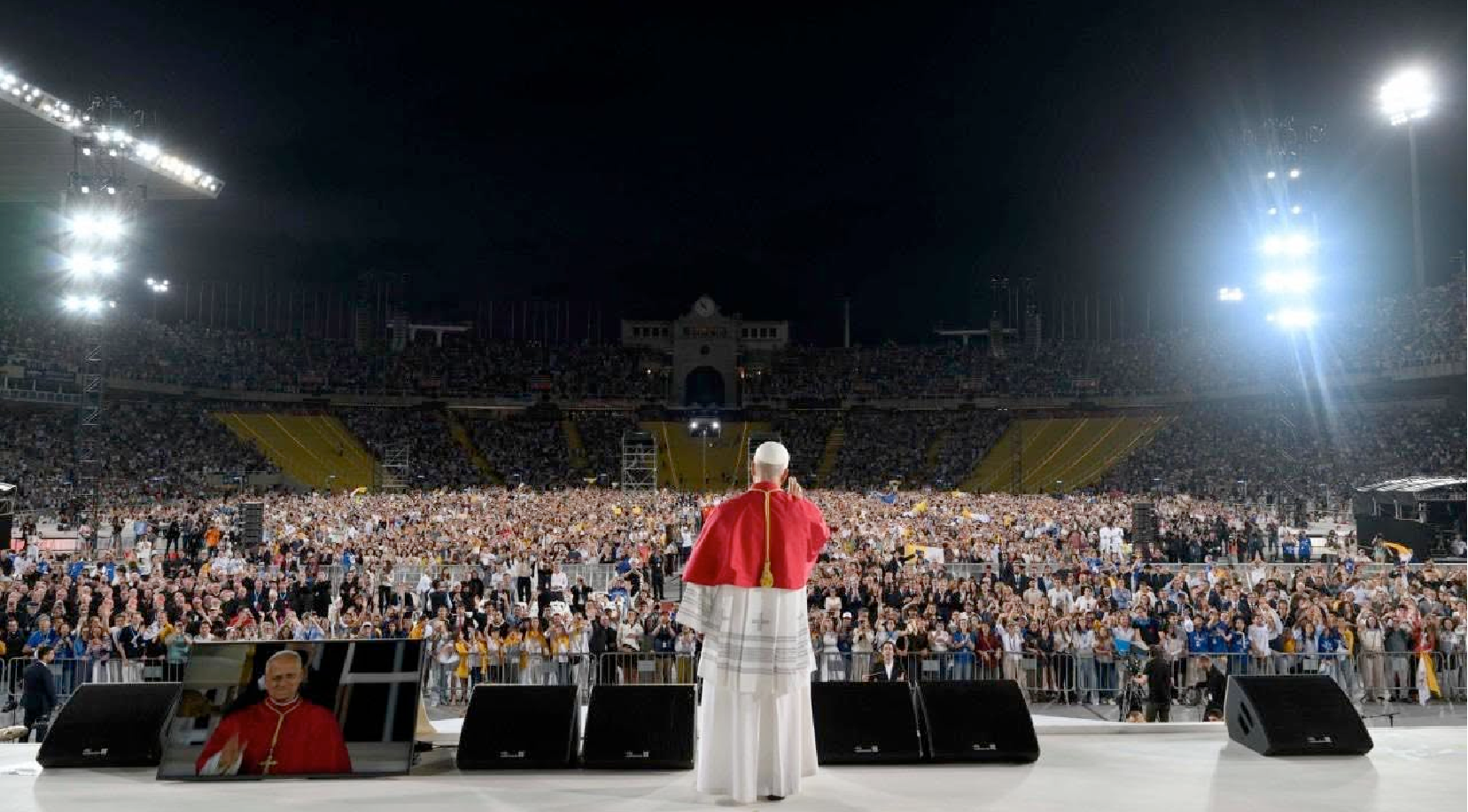
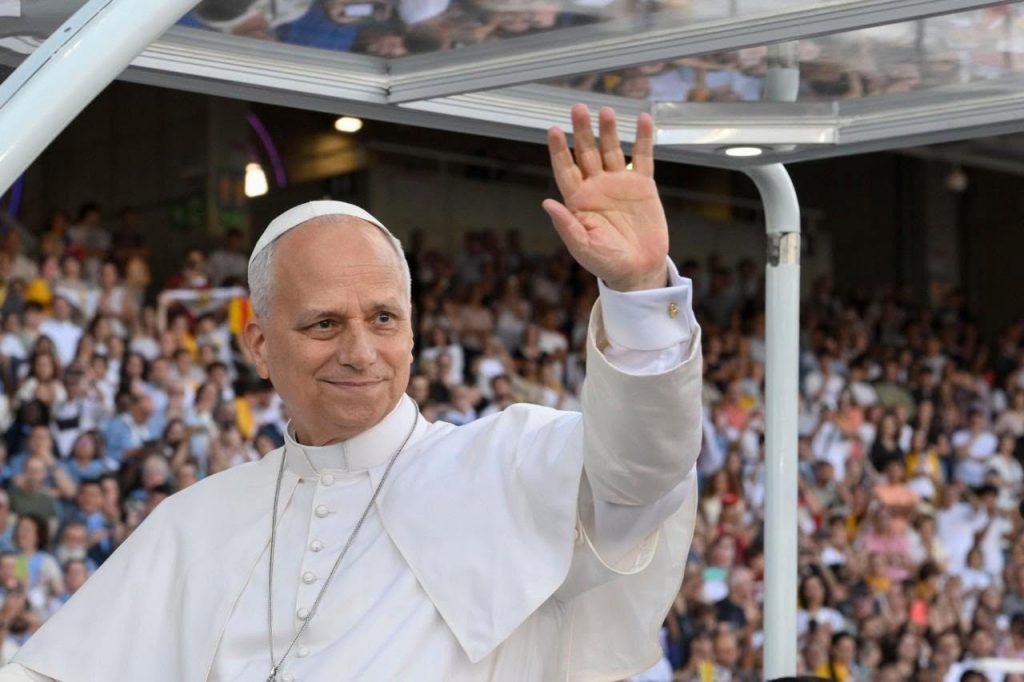
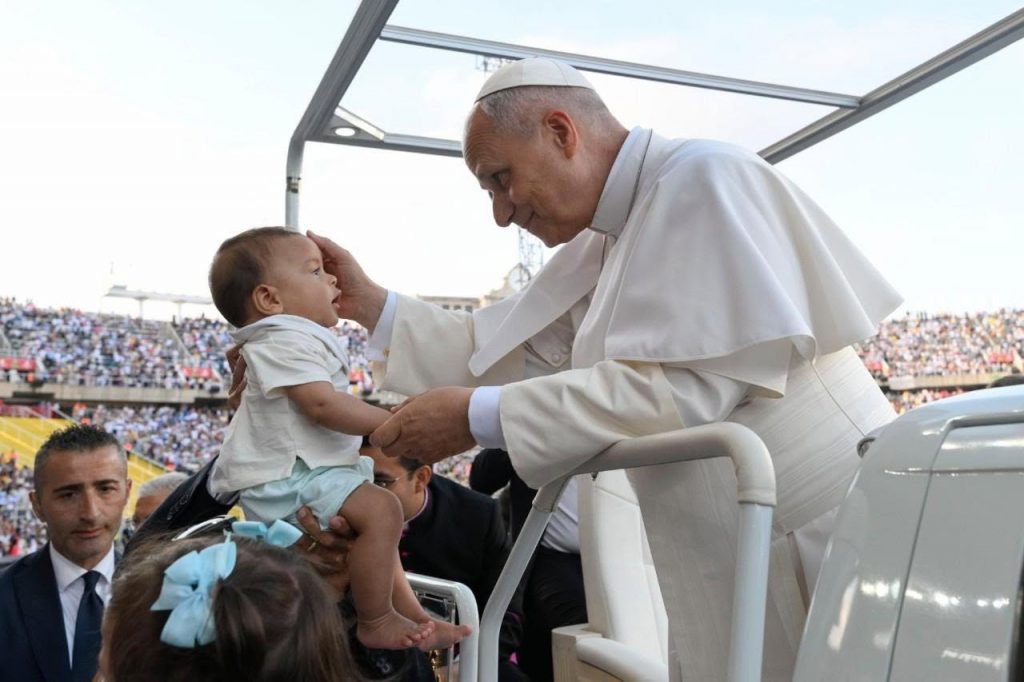
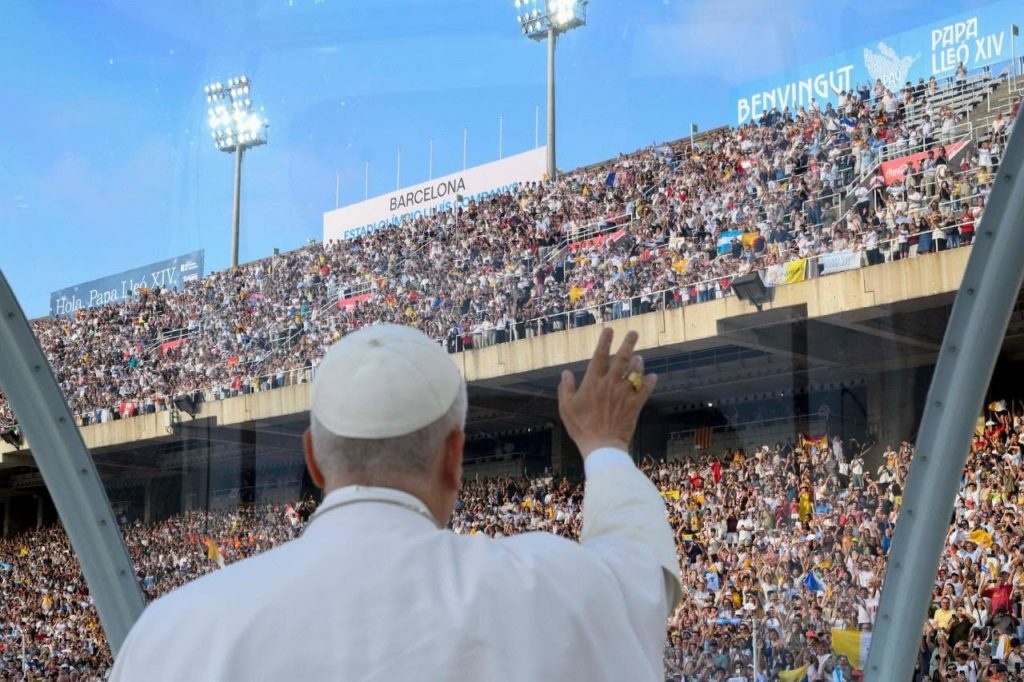
(ZENIT News / Barcelona, 06.08.2026).- On the evening of Monday, June 8, Pope Leo XIV presided over a prayer vigil with 40,000 faithful from various Catalan dioceses at the Olympic Stadium in Barcelona. Upon his arrival, to be closer to the people, the Pope took a tour of the stadium in the popemobile. The Pope blessed, kissed, and/or embraced dozens of babies and children whom their families presented to the Holy Father. Leo XIV listened to the testimonies and questions of three young people and offered them some answers and reflections. He then delivered the remarks provided below, translated into English:
***
Like Nicodemus, we too are pilgrims in the night. This Gospel figure offers us a message primarily about the journey of life. Our journey, our desires and everything we embrace and experience daily — in joys and defeats, in aspirations and plans — are the expression of our ongoing search. We are beggars for love; we are truly hungry and thirsty. We seek a deeper meaning that will sustain us, inspire us, and help us understand the mystery of our lives. As we slowly move forward, one small step at a time, we are called to engage with the shadows of our own human condition: we lack the full truth; we do not fully fathom the mystery of ourselves or the true identity of others; we do not always succeed in understanding the hidden truth of the reality that surrounds us and the events unfolding before our eyes. We seek a light to illuminate the path.
But Nicodemus also speaks to us about the path of faith. It is not a path that runs parallel to that of our human existence. Rather, these two paths are always intertwined. As we heard in the Gospel, God so loved the world that he gave us his only begotten Son, and in him, united himself forever with our flesh. He is always with the Father and with us. Thus, every time the mystery of our life unfolds in the light of a new day, in all that we are and do, we are in God’s presence and held in his eternal embrace: our life “is hidden with Christ in God” (Col 3:3). Yet, at times we experience the night of faith, the weariness of believing, the fatigue of the spirit, a sense of inadequacy in the face of the Gospel’s call, the bitterness of our failures and the fear of not measuring up.
Brothers and sisters, Nicodemus teaches us that these nights — which accompany our lives, our journey of faith, and the history in which we live — are a time of blessing, a place for rebirth, a womb that always gives birth to new life. These nights strip us bare and return us to what is essential. They remove the human and religious masks we wear by day to keep ourselves from being recognized or to present ourselves differently than we are. They expose us, revealing our lights and our shadows. These nights restore us to the humility of knowing how to look at ourselves in truth, beyond the presumption of thinking that our journey is already complete and that we move forward as if we had a clear understanding of everything, everyone and even God.
The “empty space” that night creates, even when it takes the form of suffering or dissatisfaction, of disillusionment or unbelief, can be an opportunity to receive new life, to change and be renewed, to be “born again from above,” as Jesus tells Nicodemus. In fact, God did not come to judge the world in its sin and the night of its unfaithfulness, but sent his Son to save it, to give the world eternal life.
For this reason, we too are called not to judge the “nights” — neither the nights of our own lives, those of the Church, nor those of the society around us. In the night, we must instead set out on a journey as Nicodemus did, continuing to ask questions of the Lord and open ourselves to the wind of the Spirit. We must welcome the night no longer as a sign of failure, but as the beginning of a new life.
And as we reflect on our personal journey, as well as on the “nights” of our journey as a Church and those of Spain — in its cities, its old and new forms of poverty, its society and culture — we may well ask ourselves: What are the “nights” we are passing through? What do they say to us? As we enter into them and humbly look, without prejudice, at the reality of who we are, what are we called to change? Where must we seek renewal? What direction do we want to take? What kind of society do we want to build?
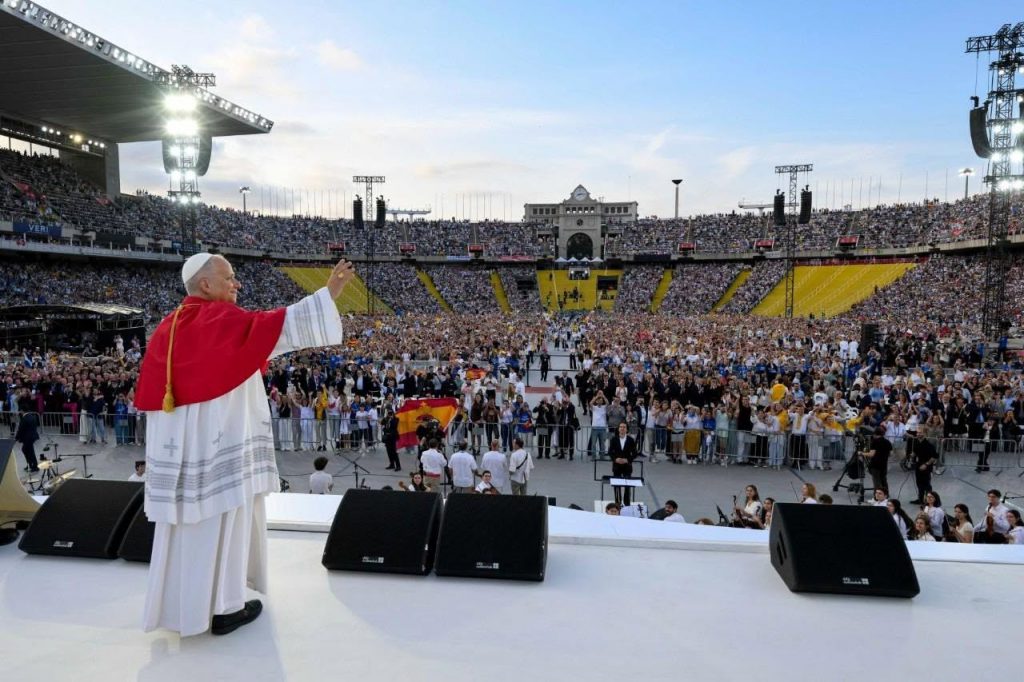
Even in the heart of night, we must not give up searching, questioning and dialoguing with God and with each other. Let us walk together in the faith that harmonizes the diversity of our ideas and sensibilities in order to seek the truth that will guide us toward the common good. This country may then be a welcoming space for all, where each person’s dignity is respected and everyone loved for who they are. Let us open ourselves to the gift of the Spirit, seeking the Lord like Nicodemus, and welcoming the light of his Gospel with the certainty that we will experience a new life within us, a presence that blesses, a gratuitous love that will help us pass from night into light. For God does not want anything to be lost, and even now he desires to give us eternal life and lead us to a happiness that has no end.
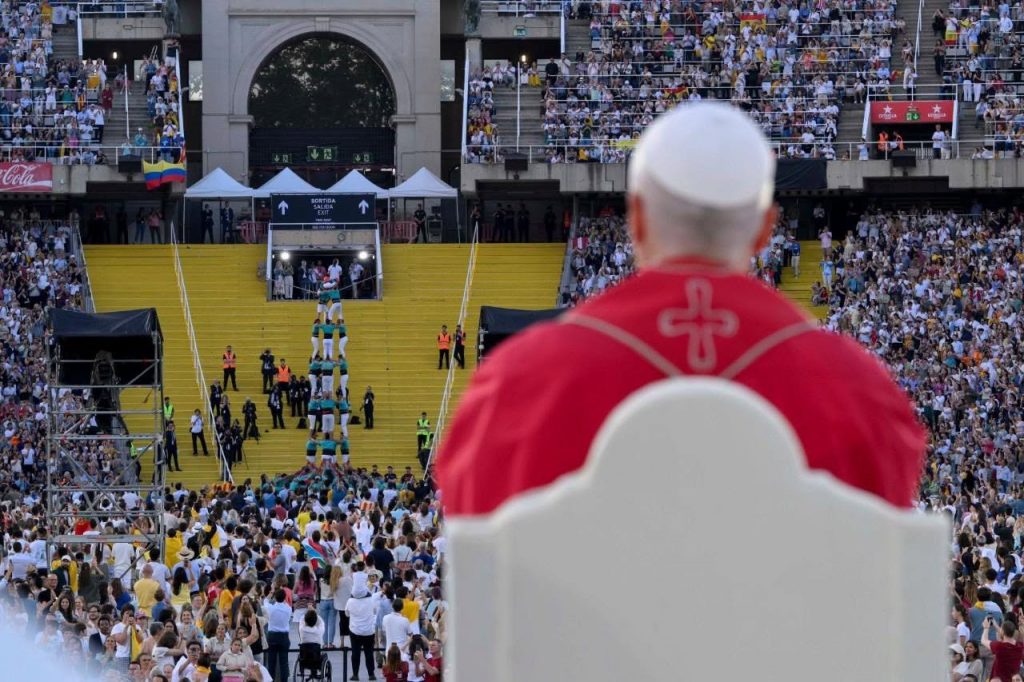
Through the intercession of the Virgin Mary, may the Lord grant us the grace to open ourselves to him and to be shaken by the wind of his Spirit.
Thank you for reading our content. If you would like to receive ZENIT’s daily e-mail news, you can subscribe for free through this link.

Publicaciones relacionadas:
 Why does Leon XIV appear in TIME magazine’s ranking of the 25 most important thinkers on artificial intelligence?
 The Pope’s (answered) question to new bishops: what does it mean to be servants of the faith of the people?
 Pope Leo XIV sends a message of gratitude to Lampedusa and suggests a visit to the island
 Justice and its function: a reflection by Pope Leo XIV before judges from around the world on the occasion of the Jubilee
