

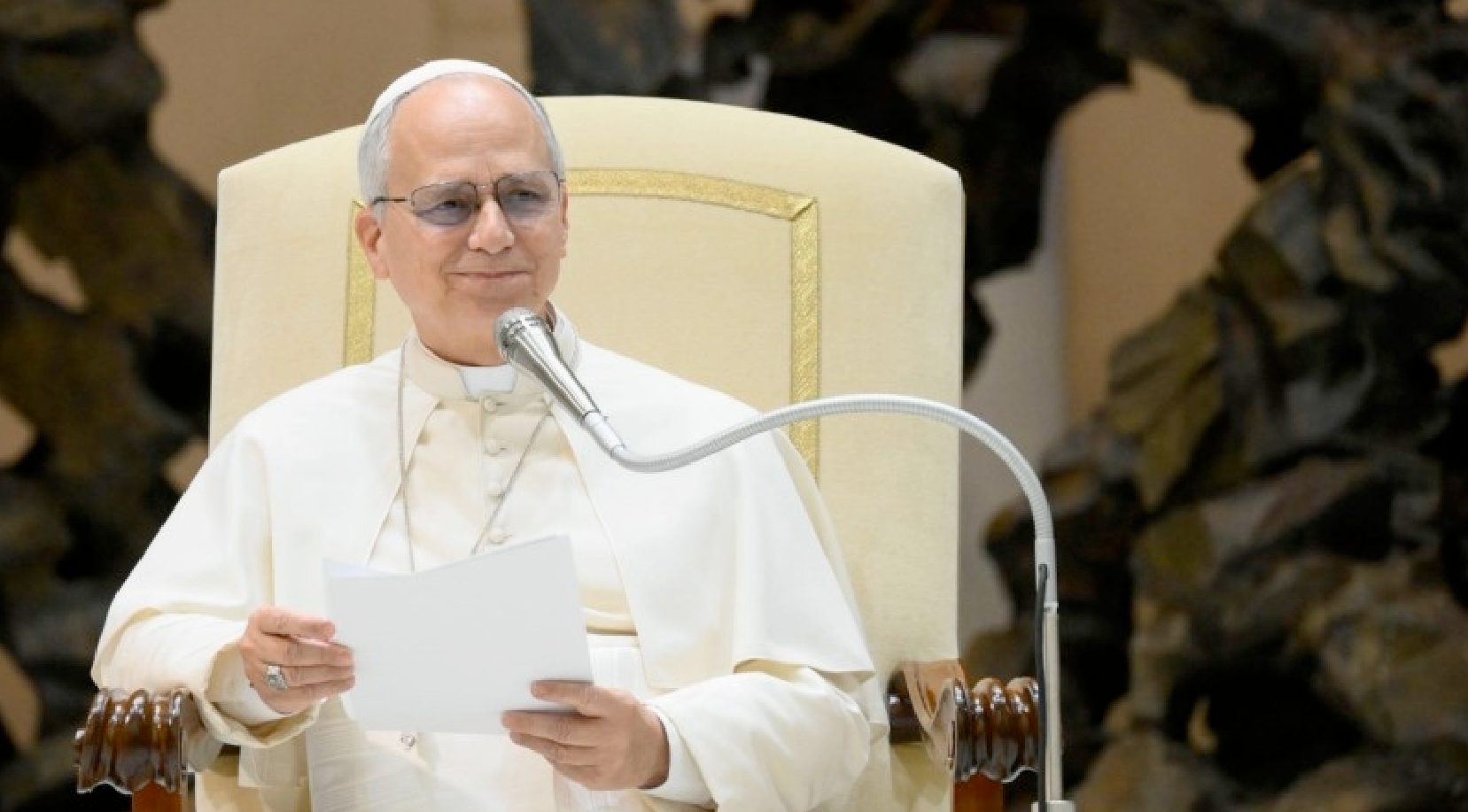
(ZENIT News / Montevideo, 05.22.2026).- Nearly four decades after the last papal visit to Uruguay, a country often described as one of Latin America’s most secular societies may soon witness an event with significance extending far beyond church life. What for weeks circulated as persistent speculation has increasingly taken shape as a near certainty: Pope Leo XIV is expected to travel to Uruguay in November 2026 as part of a broader South American journey that will likely also include Peru and Argentina.
Diplomatic and ecclesiastical sources have gradually converged on the same picture. Uruguay’s Foreign Ministry has confirmed that preparations are underway, while the country’s bishops have stated that progress toward the visit is advancing «with hope» and that there is a high probability of the Pope’s arrival.
The trip would carry particular symbolic weight because Leo XIV is not a pontiff whose biography was shaped principally by European ecclesiastical structures. The American-born, Peruvian-naturalized Pope spent decades as a missionary in Peru and later served as bishop of the Diocese of Chiclayo before becoming a global religious figure. His repeated emphasis on listening to local communities and his attention to what Catholic language often calls the «peripheries» have led many observers to view Latin America as a natural destination early in his pontificate.
Current discussions indicate that the Pope would almost certainly visit Montevideo and Florida, while a third destination in northern Uruguay remains under consideration. Cities such as Rivera and Paysandú continue to be mentioned as possible candidates, though logistical and security factors may determine the final choice.
Florida occupies a special place in these discussions because it houses the National Shrine of the Virgin of the Thirty-Three, patroness of Uruguay. Church leaders believe that a papal visit there would fit naturally within the religious symbolism of the broader South American journey. In neighboring Argentina, a stop at Luján would hold comparable significance, just as Brazil traditionally looks to Aparecida as one of its great Marian centers.
For readers unfamiliar with Uruguayan history, the country represents an unusual case within Latin America. While much of the region historically developed with strong public Catholic influence, Uruguay followed a distinctive path toward secularization. The formal separation of Church and State established through constitutional reform in 1918 ended state involvement in ecclesiastical affairs and dismantled the old patronage system through which governments influenced clerical appointments.
Ironically, some historians argue that this separation ultimately strengthened rather than weakened the Church, granting it greater independence.
Today, however, active Catholic practice remains relatively limited. Estimates place regular practicing Catholics at only around 6 to 8 percent of the population. Yet papal visits have historically generated participation far beyond the circle of regular worshippers, becoming moments of cultural and national significance.
Leo XIV would become only the second reigning Pope to visit Uruguay. John Paul II visited the country twice, first in March 1987 and again in May 1988, celebrating massive public liturgies and traveling beyond Montevideo to several regions.
Uruguay’s connections with future popes stretch even further back. Long before becoming Pope, Giovanni Maria Mastai-Ferretti — later Pius IX — visited Montevideo as a young priest in 1824. More than a century later, Eugenio Pacelli, who would become Pius XII, also traveled there and helped prepare the restoration of diplomatic relations between the Holy See and Uruguay.
The road toward Leo XIV’s visit appears to have accelerated after a meeting in the Vatican between Uruguayan President Yamandú Orsi and the Pope in late 2025. During that encounter, discussions reportedly focused on peace initiatives, poverty reduction, and educational cooperation — themes that have become recurring elements of Leo XIV’s social vision.
There also remains an anecdote that has gained almost legendary status in Uruguayan Catholic circles. After meeting with Cardinal Daniel Sturla earlier this year, the Pope reportedly smiled and said, «See you in Uruguay.»
If the journey proceeds as expected, November 2026 will represent more than the return of a Pope after 38 years. In a nation where faith increasingly occupies a quieter place in public life, the visit could become a reminder that religious memory often survives long after institutions themselves appear to fade.
Thank you for reading our content. If you would like to receive ZENIT’s daily e-mail news, you can subscribe for free through this link.

Publicaciones relacionadas:
 Pope Leo XIV will visit Lebanon, according to official statements by the Archbishop of Beirut
 Luxembourg has a new Grand Duke: this is what the Pope said in his message on the day of his coronation
 Taiwan’s president writes to Pope Leo XIV: ‘Taipei wants peace, human rights, and democracy’
 Venues of Pope Leo XIV‘s Apostolic Visit to Spain Will Include the Real Madrid Stadium, the Sanctuary of Montserrat, Parliament and Time with The Spanish Sovereigns
