

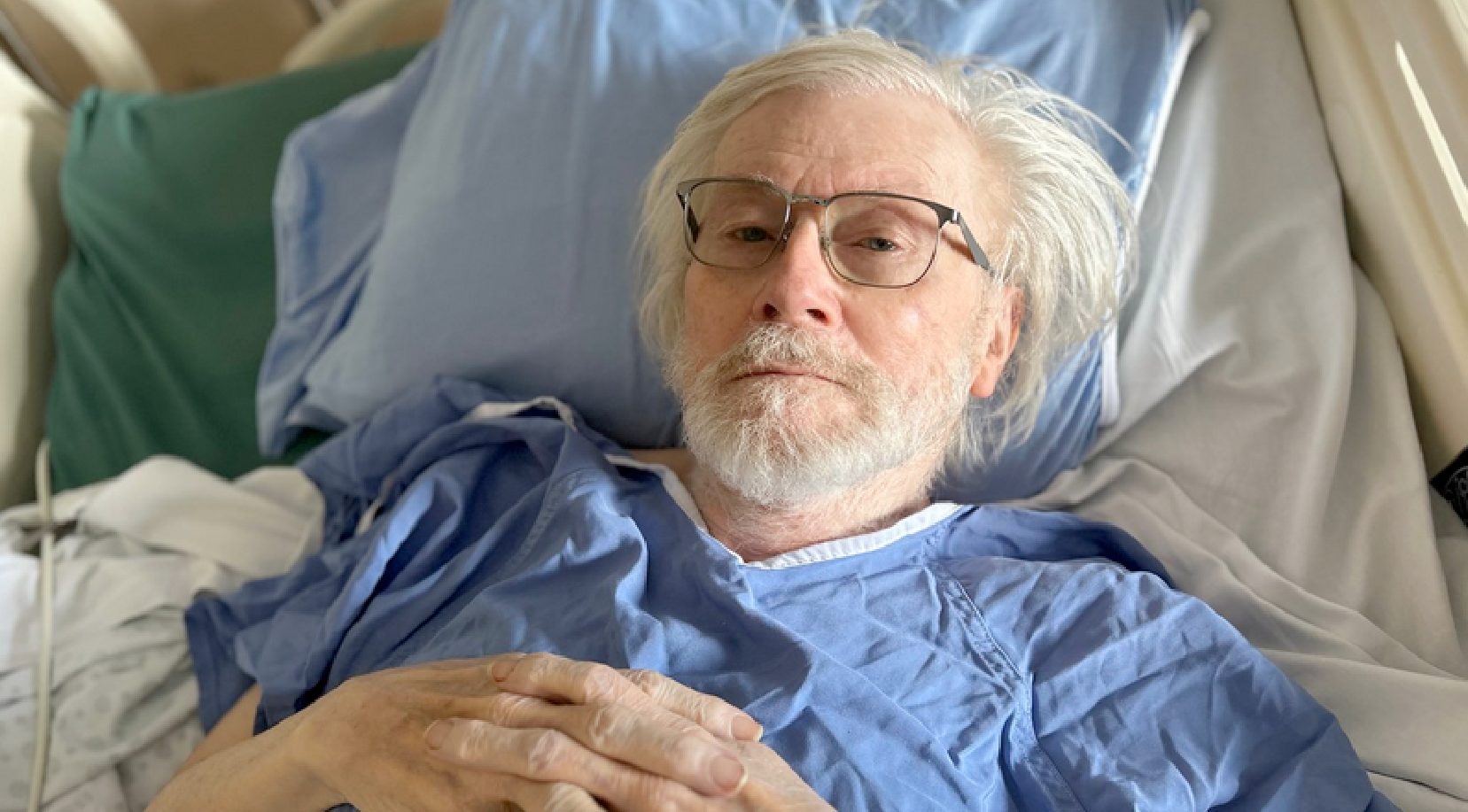
(ZENIT News / Vancouver, 05.06.2026).- What began as a painful but ordinary recovery from a broken hip became, for a Canadian Catholic priest, a disturbing encounter with what critics describe as the increasingly normalized culture of euthanasia in Canada’s healthcare system.
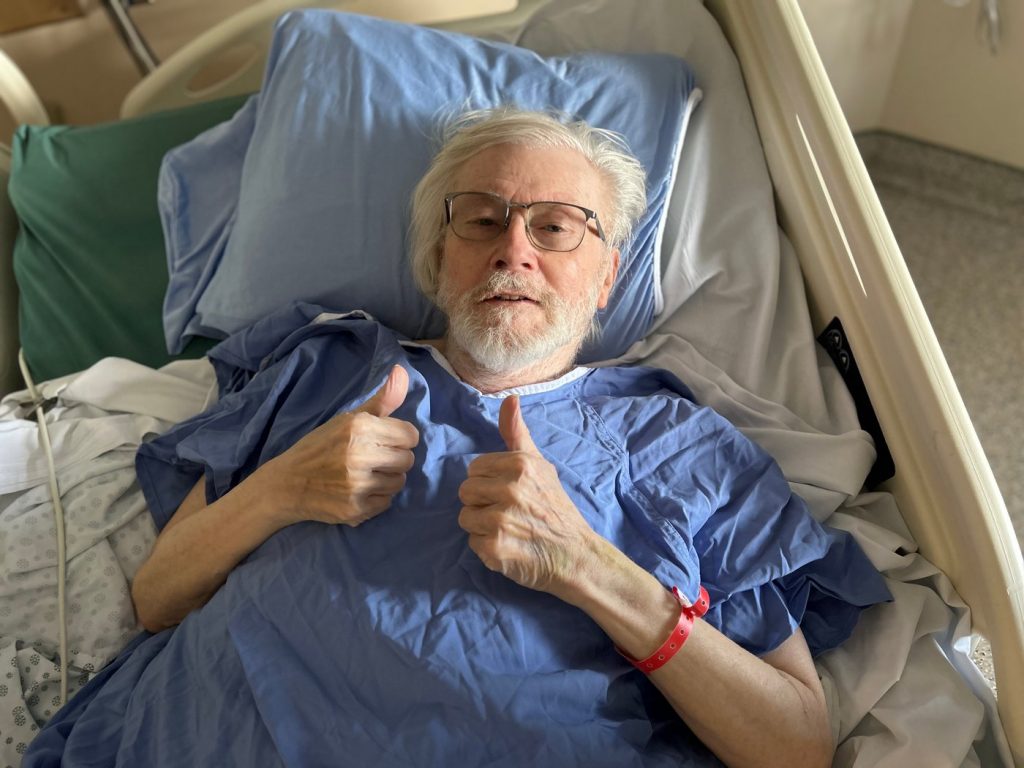
Father Larry Holland, a 79-year-old priest of the Archdiocese of Vancouver, says he was offered medically assisted death not once but twice while recovering at Vancouver General Hospital after suffering a hip fracture in a fall on Christmas Day 2025. His account, first published by The B.C. Catholic, has reignited debate over the aggressive expansion of Canada’s euthanasia regime and the ethical boundaries of medical practice in a country where assisted suicide has grown at extraordinary speed since its legalization in 2016.
Holland insists that he was neither terminally ill nor dying. Though hospitalized and undergoing rehabilitation, he says his condition was never presented as hopeless. Yet a physician informed him that Medical Assistance in Dying, commonly known as MAiD, was an option should his health deteriorate. Weeks later, according to the priest, a nurse raised the subject again, describing assisted death in terms of “compassion.”
The proposal left him stunned.
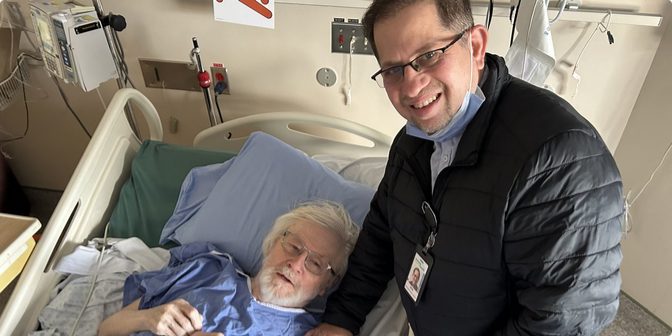
“There are certain things you simply do not discuss with some people,” Holland remarked, recalling his disbelief that medical staff would raise euthanasia with a Catholic priest known to oppose it on moral grounds. He admitted that after the first conversation he fell silent in shock.
The incident has become emblematic of a broader national controversy surrounding Canada’s rapidly expanding assisted-suicide system. Originally introduced for adults suffering from grievous and irremediable medical conditions, MAiD has steadily widened in scope through legislative and judicial developments. The country is now preparing to extend eligibility to individuals suffering solely from mental illness beginning in 2027 under the framework established by Bill C-7.
The numbers reveal the scale of the transformation. According to recent reports, Canada recorded 16,499 euthanasia deaths in a single year, making assisted death one of the country’s leading causes of mortality. Some estimates suggest that approximately one in every twenty deaths in Canada now occurs through MAiD. Statistics Canada did not list euthanasia among the ten leading causes of death between 2019 and 2022, yet it has since risen to become the sixth most common cause of death nationwide.
For opponents of the system, Father Holland’s experience illustrates what they see as a dangerous shift: from euthanasia being available upon explicit request to becoming something proactively introduced by healthcare providers themselves.
Vancouver Coastal Health, the public authority overseeing Vancouver General Hospital, defended the practice by stating that medical personnel may raise the possibility of assisted death based on their “clinical judgment,” provided they possess the appropriate training and expertise. The authority also noted that staff members are expected to respond when patients themselves inquire about MAiD.
But critics argue that introducing euthanasia to vulnerable patients—especially elderly individuals recovering from trauma—creates moral and psychological pressure precisely when people are at their weakest.
Father Larry Lynn, the Archdiocese of Vancouver’s pro-life chaplain, reacted with visible outrage upon learning of the case. He described it as one of the clearest examples yet of what he considers Canada’s “coercive and insensitive euthanasia regime.” Particularly troubling to him was the fact that healthcare professionals reportedly continued discussing assisted death even after Holland expressed moral opposition to the practice.
Lynn went further, arguing that encouraging vulnerable patients toward assisted suicide places medical professionals in a morally perilous role. He also expressed concern over evolving guidance promoted by euthanasia advocacy organizations in Canada, particularly efforts urging healthcare workers not to assume that religious believers oppose assisted death.
One document cited in the debate, produced by the Canadian Association of MAiD Assessors and Providers, advises clinicians against presuming that Catholics or other faith-based individuals reject euthanasia. The text even uses the example of Catholic nuns requesting assisted death, a comparison that critics within the Church have condemned as manipulative and deeply troubling.
The controversy unfolds amid an ongoing legal and political struggle over the future of faith-based healthcare institutions in Canada. In British Columbia, Providence Health Care, a Catholic healthcare provider, has become embroiled in legal disputes concerning whether religious hospitals and care centers can be compelled by the state to facilitate euthanasia despite their ethical objections.
The stakes are especially significant because Canada now possesses the fastest-growing euthanasia program in the world. What was initially presented politically as a narrowly limited response to extreme suffering has evolved into a much broader system that increasingly touches questions of disability, mental illness, aging, and the moral identity of healthcare itself.
Father Holland’s acknowledged that, when confronted with suffering, the temptation to seek an immediate escape can feel profoundly human. “You always look for the easy way out,” he admitted candidly. But he also insisted that enduring pain can lead to unexpected forms of growth, resilience, and even renewal.
“Suffering can motivate you,” he reflected. “It can open new worlds, new perspectives, new opportunities.”
For the priest, sharing his story is not merely an act of denunciation but also a warning. In his view, a society that too quickly presents death as a solution risks losing confidence in the deeper meaning of care, accompaniment, and human dignity during moments of vulnerability.
Thank you for reading our content. If you would like to receive ZENIT’s daily e-mail news, you can subscribe for free through this link.

Publicaciones relacionadas:
 3 Characteristics of the mission to which God calls His people: a homily for priests on Holy Thursday that applies throughout the year
 Euthanasia accounts for 4% of causes of death in Belgium, according to a report
 Success Story: This Is the Residence Where 8 Out of 10 Priests with Psychological Issues Find Success
 Here’s how Pope Leo XIV’s surprise video call to Lebanese priests in a war zone went
