

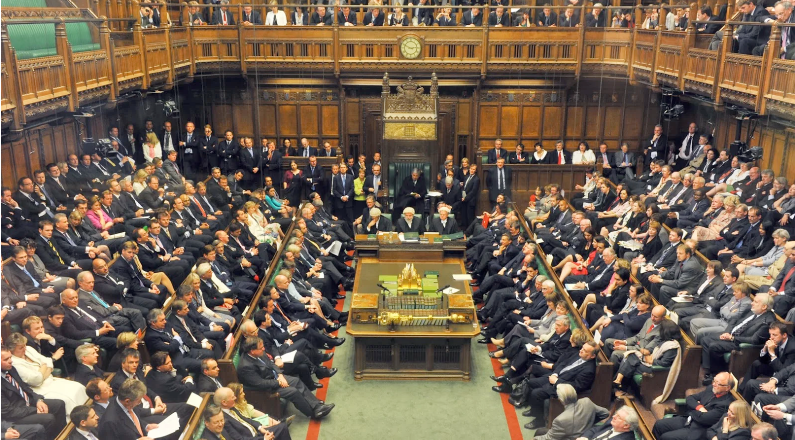
(ZENIT News / London, 03.19.2026).- In a decision that is already reshaping the legal and ethical landscape of abortion in the United Kingdom, the House of Lords has rejected two key amendments aimed at limiting one of the most far-reaching proposed changes to abortion law in decades.
During a late-night session on March 18, peers voted to retain Clause 208 within a broader Crime and Policing Bill—an addition that would effectively decriminalize women who abort under any circumstances, including at advanced stages and even up to the point of birth. The amendment seeking to remove the clause, tabled by Baroness Monckton, was defeated by 185 votes to 148. A second proposal, introduced by Baroness Stroud to reinstate mandatory in-person medical consultations prior to at-home abortions, was also rejected, by 191 votes to 119.
The votes mark a decisive moment in a legislative process that critics say has moved with unusual speed and limited scrutiny. Clause 208 was first introduced in the House of Commons by MP Tonia Antoniazzi after just 46 minutes of debate among backbenchers, without prior public consultation, committee-stage examination, or formal evidence sessions. For many observers, this procedural context has become as controversial as the substance of the proposal itself.
⚠️This clause would allow women to self-administer an abortion for any reason, right up to birth, without fear of any legal consequences, states Baroness Monckton (@MoncktonR).
Such a dangerous clause should not become law. pic.twitter.com/QAformNsG1
— Right To Life UK (@RightToLifeUK) March 18, 2026
At the heart of the debate lies a profound shift in legal framing. Under current law, abortion in England and Wales is regulated within a defined gestational limit—generally 24 weeks—with specific conditions. Clause 208 does not formally legalize late-term abortion as a clinical practice, but it removes criminal liability for women who terminate their own pregnancies outside that framework. Legal experts note that this distinction could nonetheless have sweeping practical consequences, particularly in cases involving late-term abortions carried out outside medical settings.
Opponents in the Lords warned that such a change risks creating a regulatory vacuum. Baroness Monckton argued that the clause would allow self-administered abortions “for any reason, at any stage,” raising concerns not only about fetal viability but also about the physical and psychological risks to women. She and other peers linked the proposal to the expansion of so-called “pills by post” schemes introduced during the Covid-19 pandemic, cautioning that the absence of in-person consultations could facilitate coercion or conceal abuse, including in situations involving domestic violence or human trafficking.
These concerns were echoed by Lord McCrea, who questioned how authorities would respond in extreme scenarios, such as the discovery of a fully developed fetus outside a clinical context. Even under the proposed framework, he noted, police investigations might still be required to establish the circumstances of such cases, potentially undermining the very legal clarity the clause aims to provide.
Supporters of tighter safeguards also pointed to medical risks associated with remote abortion protocols. A case cited in the chamber involved a 16-year-old girl who believed she was eight weeks pregnant but was later found to be at 20 weeks’ gestation—a discrepancy that, critics argue, could have been avoided with an in-person assessment.
The rejection of the amendment on medical consultations leaves intact the current system, in which abortion pills can be prescribed following remote evaluation. Professional bodies such as the Royal College of Obstetricians and Gynaecologists have supported this model, but it remains contested among lawmakers and advocacy groups.
⚠️This clause would allow women to self-administer an abortion for any reason, right up to birth, without fear of any legal consequences, states Baroness Monckton (@MoncktonR).
Such a dangerous clause should not become law. pic.twitter.com/QAformNsG1
— Right To Life UK (@RightToLifeUK) March 18, 2026
Public opinion appears to diverge sharply from the legislative trajectory. Surveys indicate that 89 percent of the general population—and 91 percent of women—support an explicit ban on sex-selective abortion. More than half of respondents also believe it should remain illegal to terminate a healthy pregnancy beyond the current legal limit, while only 16 percent disagree. Support for abortion up to the moment of birth remains marginal, with just 1 percent of women expressing approval.
Beyond the immediate legal implications, the debate has raised broader constitutional and ethical questions. Several peers, including Baroness Lawlor and Baroness Spielman, criticized the absence of a formal impact assessment and warned that embedding such a significant policy shift within a wider bill risks bypassing the deliberative standards expected in parliamentary democracy.
Even senior Church figures entered the debate. The Archbishop of Canterbury cautioned that a matter of such moral gravity should not be legislated through what he described as a “hastily attached” clause, while the Bishop of Leicester underscored the potential human cost of inadequate medical oversight.
As the bill continues its legislative journey, attention now turns to whether further revisions will be introduced or whether Clause 208 will pass into law in its current form. What is clear is that the House of Lords’ decision has intensified an already polarized debate—one that touches not only on legal doctrine, but on fundamental questions about autonomy, protection, and the role of the state in the most intimate of human decisions.
Thank you for reading our content. If you would like to receive ZENIT’s daily e-mail news, you can subscribe for free through this link.

Publicaciones relacionadas:
 USA: For the First Time an American Vice-President Visits an Abortion Clinic During An Electoral Period
 UN Maternal Health Coalition Attacks Religious Voices
 Abortion reaches the UN Security Council once again
 USA: Bishop Chairmen Respond to Administration’s Announcement of Expansion of Access to IVF and Fertility Treatments
