

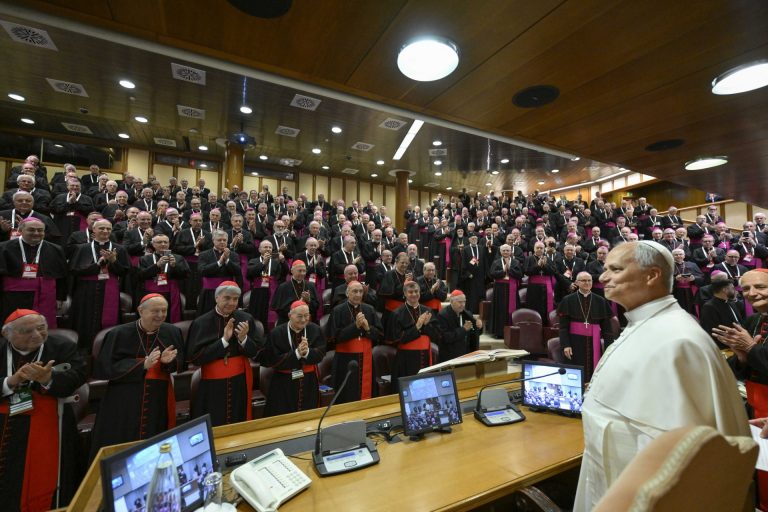
(ZENIT News / Rome, 06.04.2026).- As Pope Leo XIV advances the early months of his pontificate, he is increasingly revealing the priorities that will shape the Catholic Church’s path in the coming years. The Extraordinary Consistory scheduled for June 26, 27 and 29 in the Vatican offers perhaps the clearest indication yet of those priorities: a Church called to confront a fractured world, strengthen its commitment to peace, and continue the synodal journey initiated under his predecessor.
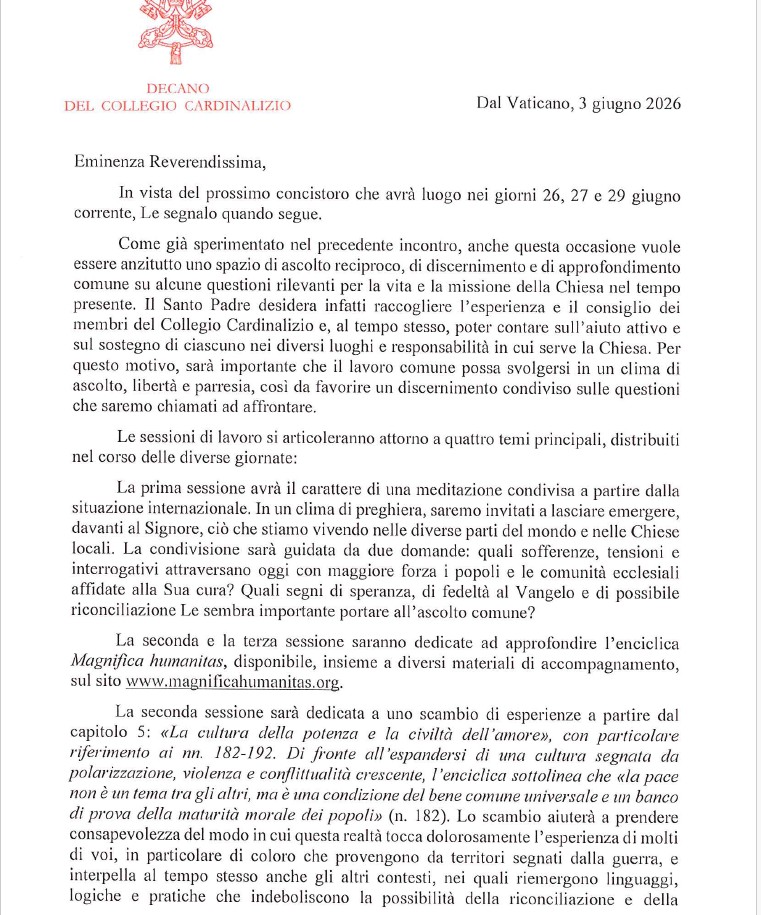
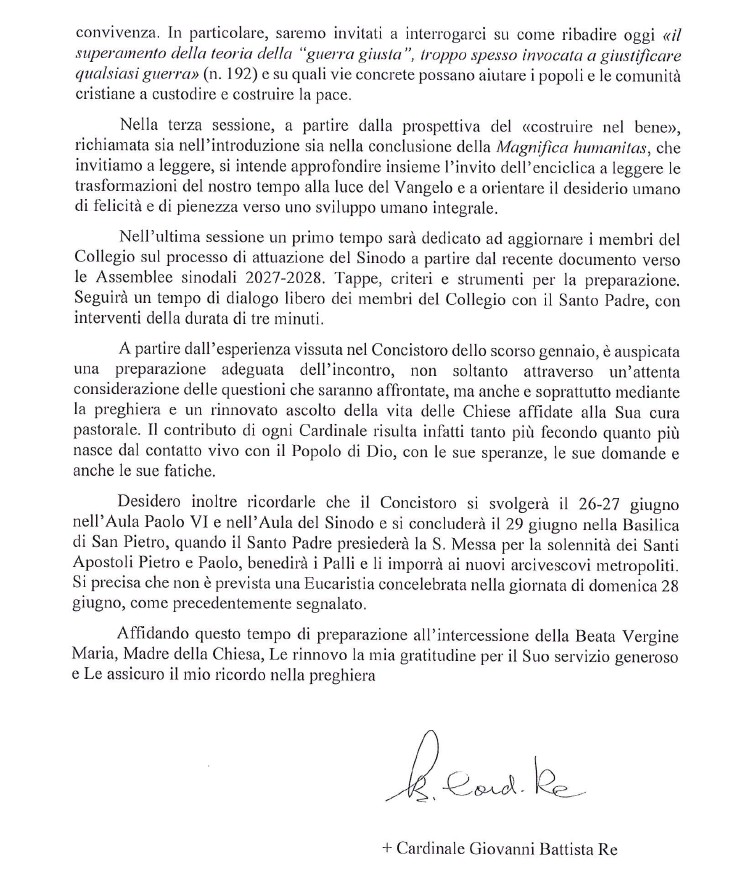
In a letter sent to the members of the College of Cardinals, Cardinal Giovanni Battista Re, Dean of the College, outlined a program that combines pastoral realism with broad ecclesial reflection. The gathering is designed not merely as an administrative meeting but as an exercise in consultation, allowing cardinals from every continent to share firsthand experiences from the local Churches entrusted to their care.
The first working session will focus on the international situation and the condition of the Church across the world. Cardinals will be invited to present both the wounds and the hopes they encounter in their respective regions. The discussion aims to identify the most urgent challenges facing peoples and ecclesial communities today, while also highlighting signs of reconciliation, fidelity to the Gospel, and renewal that often emerge even amid conflict and uncertainty.
Particular attention will then turn to Magnifica Humanitas, Leo XIV’s encyclical published on May 25, which is rapidly emerging as the foundational programmatic text of his pontificate. The decision to devote two full sessions to the document underscores its importance not only as a theological reflection but as a guide for pastoral action and ecclesial discernment.
One of the most significant debates will concern the encyclical’s treatment of war and peace. Against the backdrop of growing geopolitical tensions, armed conflicts, and deep social polarization, Leo XIV argues that peace is not simply one moral concern among many but a prerequisite for authentic human flourishing and the common good. Cardinals from regions directly affected by war are expected to offer testimony about the concrete human consequences of violence, while the broader assembly will examine how Christians can become more effective agents of reconciliation.
Especially noteworthy is the Pope’s call to move beyond the traditional theory of the “just war,” which the encyclical argues has too often been invoked to legitimize armed conflict. The discussion is expected to explore both the theological implications of this position and the practical ways in which Catholic communities can contribute to peacebuilding in societies marked by division and instability.
A second reflection on Magnifica Humanitas will broaden the horizon beyond questions of conflict. Participants will consider the profound cultural, social, and technological transformations reshaping contemporary life and examine how these developments can be interpreted through the lens of the Gospel. The objective is not merely to analyze change but to orient humanity’s search for happiness, dignity, and fulfillment toward an integral vision of human development.
The final working session will revisit another defining theme of recent Church life: synodality. Cardinals will receive an update on preparations for the ecclesial assemblies planned for 2027 and 2028, including the stages, criteria, and tools intended to guide the next phase of implementation. A period of open dialogue with the Pope will follow, with interventions limited to three minutes, allowing members of the College to speak directly and candidly with the Pontiff.
The agenda itself is revealing. While speculation in some circles had focused on possible discussions concerning liturgical questions or curial reform, the Consistory will instead concentrate on issues that Leo XIV appears to regard as more urgent: the global crisis of peace, the Church’s mission in a rapidly changing world, and the practical application of synodality.
The gathering will conclude on June 29 with the Solemnity of Saints Peter and Paul in St. Peter’s Basilica. During the Mass, Pope Leo XIV will bless and personally impose the pallium on newly appointed metropolitan archbishops. This ancient woolen band, marked with black crosses, symbolizes both their pastoral responsibility and their communion with the Successor of Peter. In a pontificate that has repeatedly emphasized unity, service, and shared responsibility within the Church, the gesture will carry particular significance.
Taken as a whole, the June Consistory illustrates Leo XIV’s desire to transform meetings of the College of Cardinals into genuine forums of collegial discernment rather than merely ceremonial occasions.
Thank you for reading our content. If you would like to receive ZENIT’s daily e-mail news, you can subscribe for free through this link.

Publicaciones relacionadas:
 Pope Leo entrusts the important Dicastery that elects bishops to a Carmelite and canonist
 Pope Leo XIV: yes to synodality, but without undermining the authority of the bishop
 Pope Leo XIV accepts resignation of bishop whom Pope Francis appointed cardinal, but who “did not want” to receive the appointment
 Pope Leo XIV continues to reshape the Roman Curia: Meet the new Australian prefect of the Dicastery for Legislative Texts
