

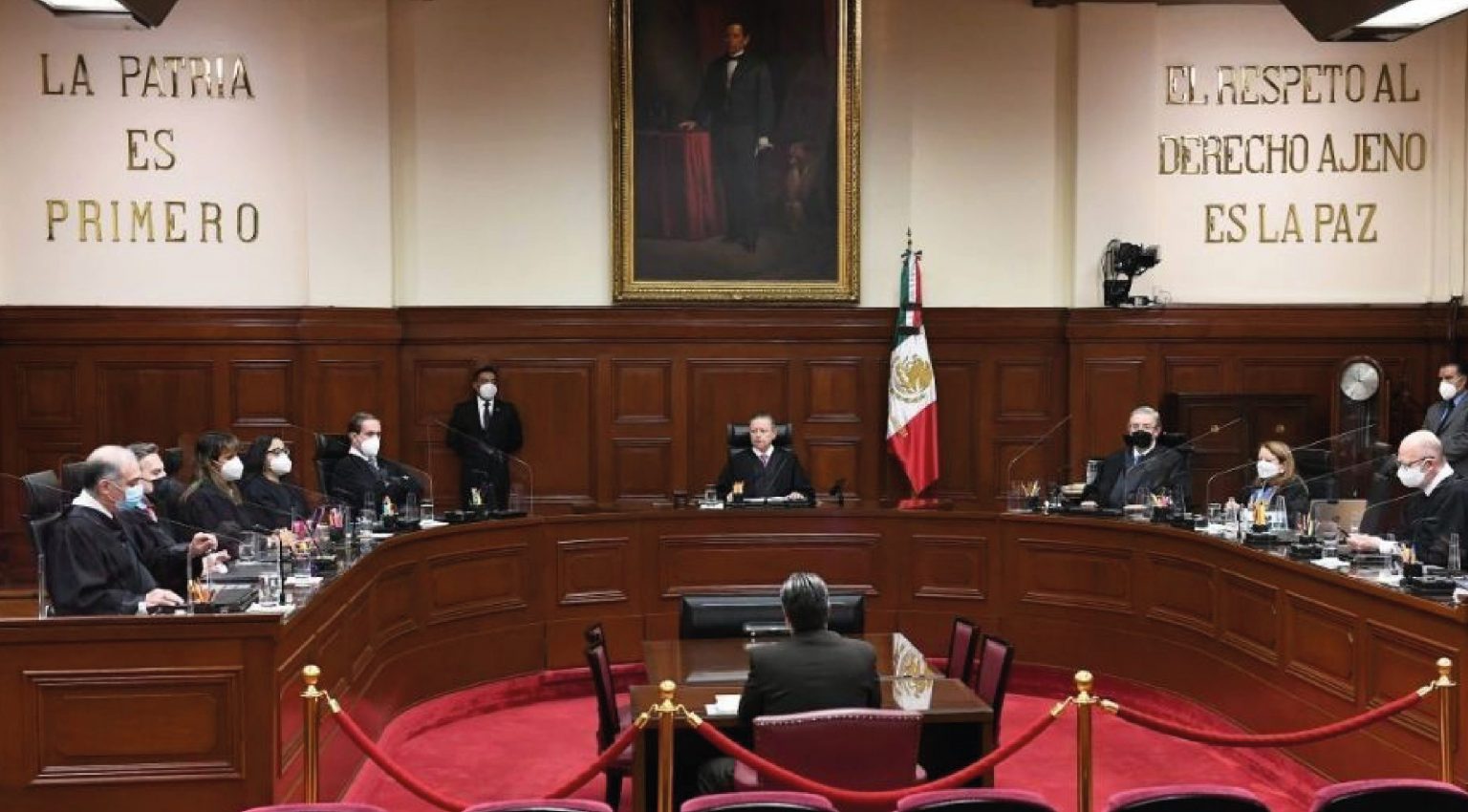
(ZENIT News / Mexico City, 06.06. 2026). – The Catholic Church in Mexico has criticized the Supreme Court of Justice of the Nation’s (SCJN) project, which is positioned to declare a pro-life law in the state of Aguascalientes unconstitutional. That state law punishes abortion at six weeks of gestation as an intentional crime.
The Archdiocese of Mexico clarified that these legal actions «jeopardize the protection of human life» and that decriminalizing abortion at any stage of pregnancy attacks human dignity. It explained that leaving this decision to specialists, legislators, or judges deprives families, communities, and social organizations of their role in ensuring that «laws and institutions are truly at the service of the person.»
In a May 30 editorial, the Archdiocese of Mexico’s media outlet, Desde la Fe, pointed out that pro-abortion initiatives open the door to discrimination against pregnant women by failing to include references to the responsibilities of men who impregnate women through rape or coercion.
The Catholic Church points out how attempts to justify abortion are absurd: «We are concerned that some initiatives are presented as expansions of rights when, in reality, they may imply the exclusion of other human beings from the protection that the State is called to guarantee.»
The National Front for the Family and other associations protested before the Supreme Court of Justice of the Nation (SCJN), mentioning the proposal to legalize abortion up to nine months of pregnancy, a proposal that has not been publicly stated in any press release or document.
The court analyzed Constitutional Controversy 172/2024, filed in 2024 by the country’s executive branch and the National Human Rights Commission against the constitutional protection of the State of Aguascalientes, which recognizes life «from conception,» as well as against the articles of that state’s Penal Code that restrict abortion to a maximum of six weeks of gestation.
The draft opinion was prepared by Justice Irving Espinosa Betanzo, who opines that «the only way to eliminate criminalization is through total decriminalization, whereby abortion would be regulated solely within the sphere of public health.» It is striking that the proposal is based on the feminist organization GIRE (Information Group on Reproductive Choice), an abortion provider associated with Planned Parenthood, a world leader in the legal killing of babies in their mother’s womb.
Human Rights Watch also calls on the Mexican State to eliminate the crime of abortion and warns that social criminalization is a barrier that obstructs access to safe abortion throughout the country. On April 24, 2007, Mexico City became the first state constitution to decriminalize abortion up to 12 weeks. This decision has been followed by 23 of the country’s 32 states, after the Supreme Court ruling in 2023 that declared the criminalization of the euphemism «right to choose» unconstitutional and ordered the Federal Congress to remove the crime of abortion from the Penal Code.
Rodrigo Ivan Cortes, President of the National Front for the Family, spoke out strongly: «The Supreme Court intends to commit a supreme injustice this week by planning to vote on a proposal to eliminate the crime of abortion in Aguascalientes,» with «repercussions that could extend throughout the Republic. Mexico does not need more death; we already have enough with the hundreds of thousands of people murdered by organized crime, without the Supreme Court now seeking to legalize the killing of the most innocent.»

Publicaciones relacionadas:
 USA: Landmark Alabama Supreme Court decision protects the life of human embryos
 USA: 22 states, dozens of groups support Idaho’s pro-life law
 European Parliament Calls for Protection of “Right” to Abortion in the European Charter of Fundamental Rights
 Planned Parenthood Reports US$178 Million in Earnings for Killing Almost 400,000 Babies
