

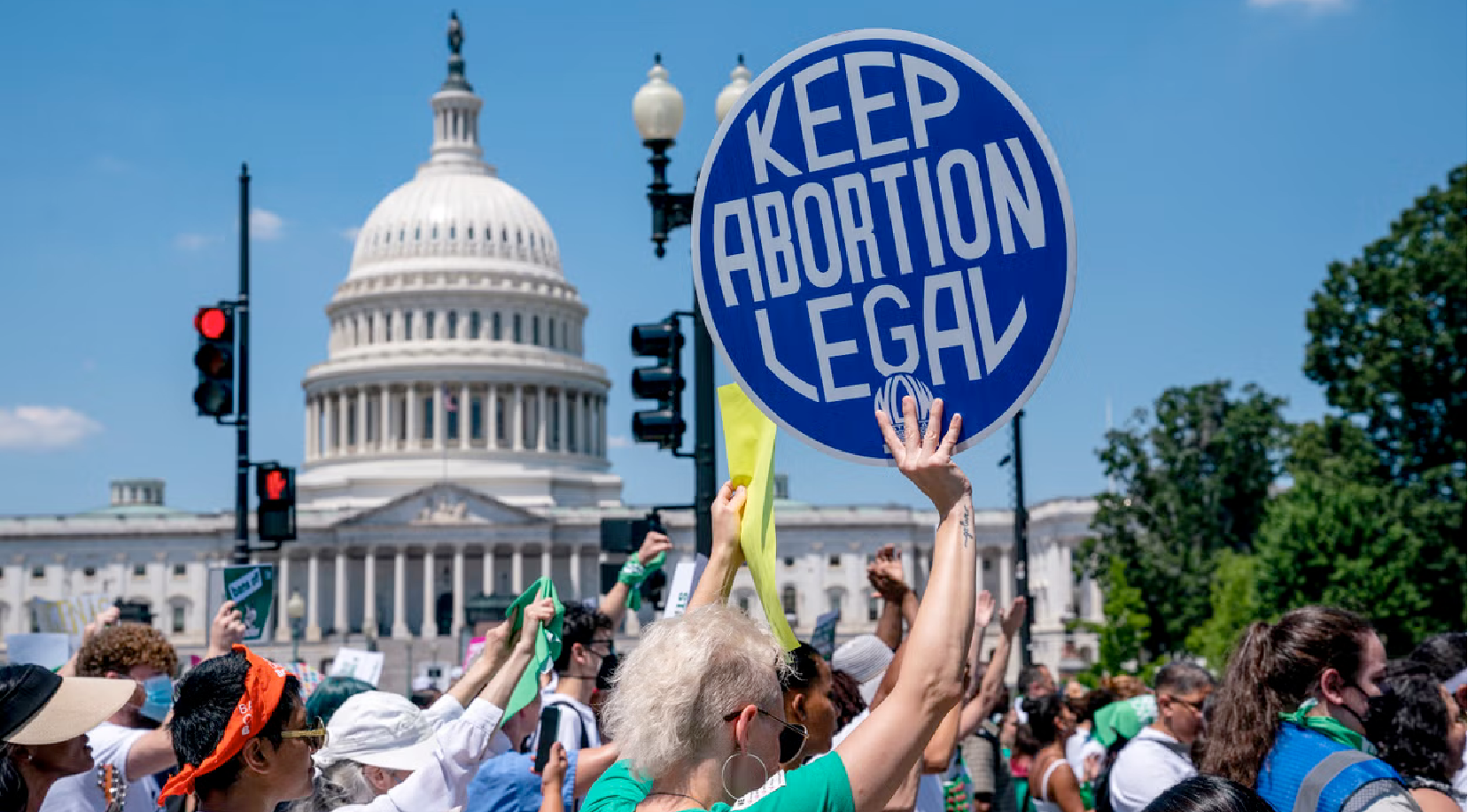
(ZENIT News / Washinton, 04.16.2026).- Four years after the United States Supreme Court dismantled the federal framework established by Roe v. Wade, the country finds itself in a paradoxical moment: public opinion remains broadly supportive of legal abortion, yet access to the procedure has become increasingly uneven and, in many places, more restricted. The result is a national debate no longer defined by a single legal standard, but by a patchwork of state laws and sharply diverging moral visions.
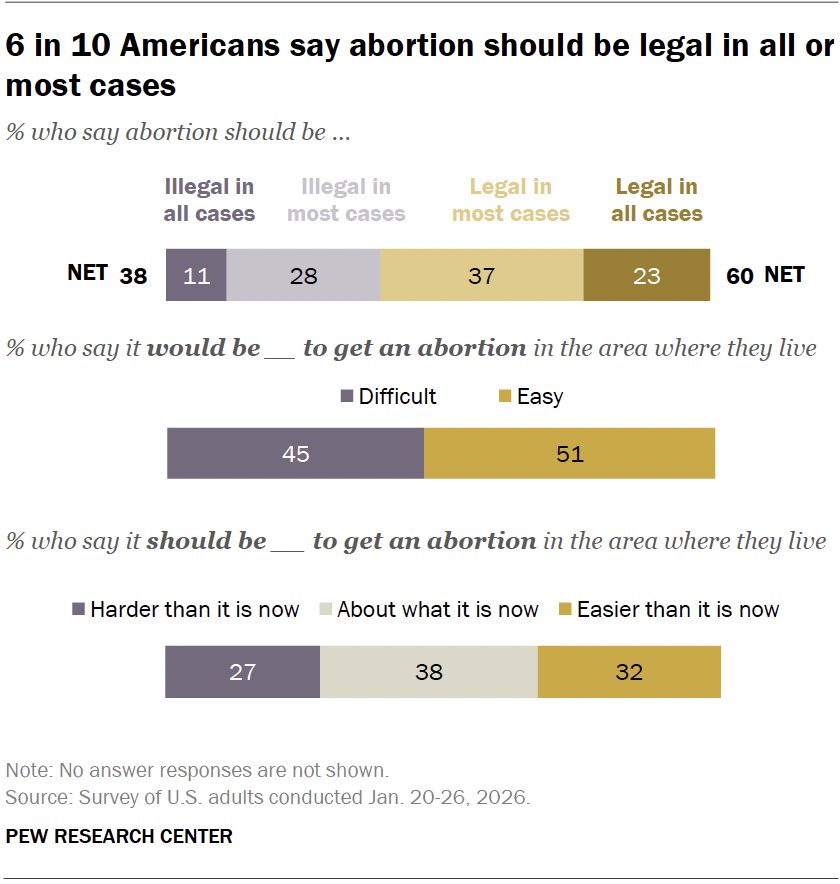
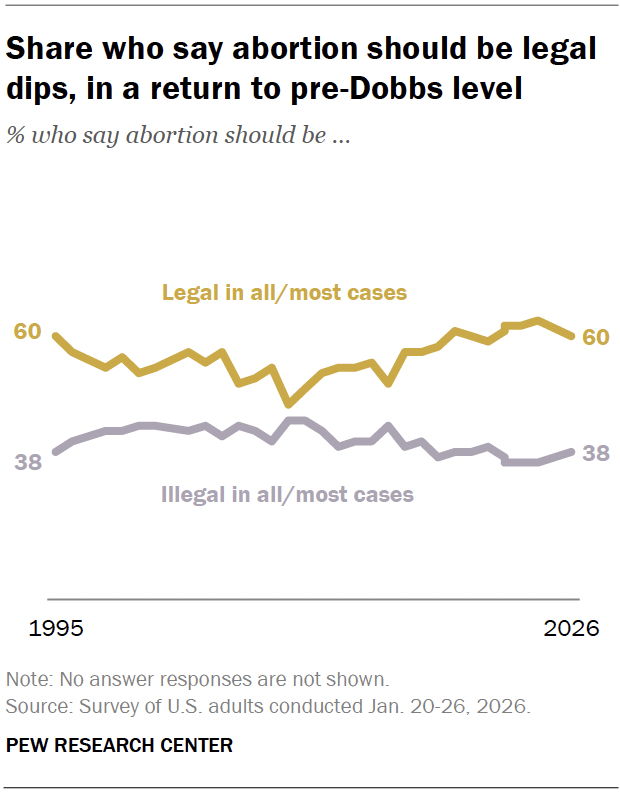
Current data indicate that 60 percent of American adults believe abortion should be legal in all or most cases. Although this represents a slight decline from 63 percent in 2024, it remains consistent with levels recorded just before the Court’s 2022 Dobbs decision, when 61 percent held the same view. In historical perspective, support for legal abortion today is still significantly higher than in the 1990s and early 2000s.
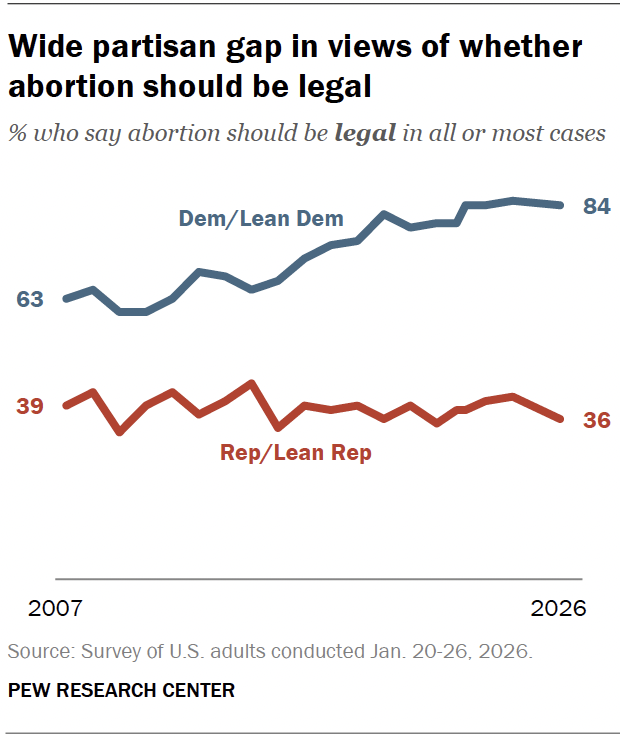
Yet beneath this apparent stability lies a deepening polarization. The modest drop in support is concentrated entirely among Republicans and Republican-leaning independents. Today, only 36 percent of Republicans say abortion should be legal in most or all cases, down from 41 percent two years earlier. Among Democrats, by contrast, attitudes have remained strikingly consistent: since 2022, at least 84 percent have supported legal abortion.
This divergence has widened the partisan gap to levels unseen in previous decades. In 2007, the difference between Republican and Democratic positions stood at 24 percentage points. It has now doubled to 48 points, reflecting not only political disagreement but a broader cultural divide in how Americans interpret the moral and legal status of abortion.
Religious identity continues to play a significant role in shaping these views. While majorities across many demographic and religious groups support legal abortion, white evangelical Christians remain a notable exception. Approximately 74 percent say abortion should be illegal in all or most cases, aligning closely with the 63 percent of Republicans who hold the same position. These figures underscore how theological convictions, particularly those emphasizing the sanctity of life from conception, remain influential in public discourse.
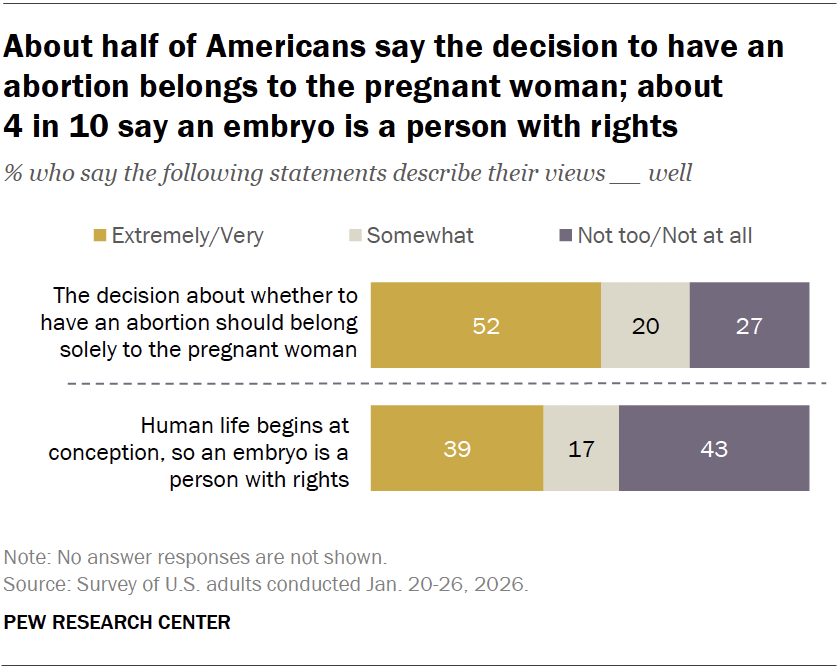
At the same time, American opinion resists simple categorization. Around 52 percent of adults say the statement that abortion decisions should rest solely with the pregnant woman accurately reflects their views. Yet 39 percent also identify with the assertion that human life begins at conception and that an embryo possesses rights. Notably, about one-third of Americans say both statements describe their perspective at least to some degree, revealing a moral ambivalence that complicates the political binary.
If the legal framework has shifted dramatically, so too has the lived experience of access. Today, 51 percent of Americans say obtaining an abortion would be easy where they live, while 45 percent consider it difficult. This perception has changed over time: in 2019, before Roe was overturned, only 32 percent said access would be difficult; by 2024, that figure had risen to 39 percent and has continued to edge upward.
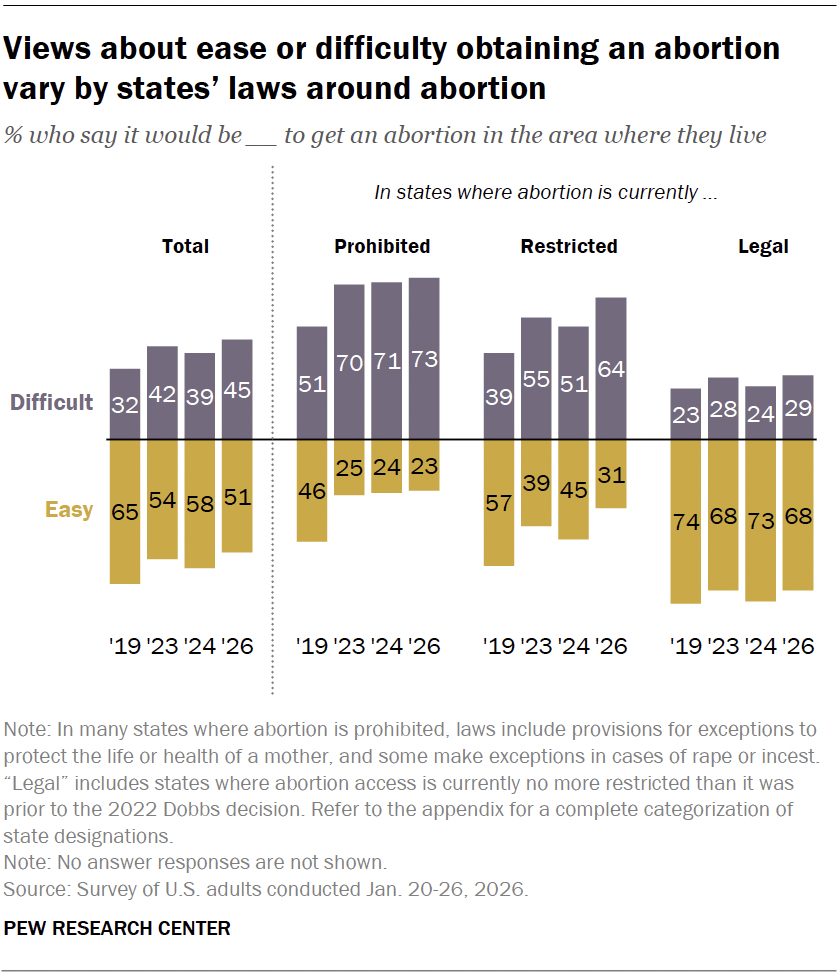
Geography has become the decisive factor. In states where abortion is banned, 73 percent of residents say it is difficult to obtain the procedure. In states with gestational limits—ranging from six to twenty weeks—64 percent report difficulty, compared with 31 percent who say access is easy. By contrast, in states where abortion remains broadly legal, including beyond 24 weeks in some cases, 68 percent describe access as easy. These patterns hold across party lines, suggesting that personal experience of local laws shapes perception regardless of political affiliation.
The debate has also expanded to include medication abortion, which has become an increasingly prominent method. A majority of Americans, 55 percent, say it should be legal, compared with 26 percent who believe it should be illegal. However, opposition has grown slightly since 2024, indicating that this aspect of abortion policy is becoming a new frontier in the broader controversy.
When asked about the future direction of policy, Americans remain divided. About 32 percent say abortion should be easier to access in their area, 27 percent believe it should be more difficult, and 38 percent favor maintaining current conditions. These figures suggest a public that is neither uniformly progressive nor uniformly restrictive, but rather segmented and context-dependent.
The post-Roe landscape has therefore not resolved the abortion question in the United States; it has relocated it. The issue now unfolds state by state, community by community, shaped by local legislation, religious convictions and political alignments. What was once a national legal framework has given way to a decentralized system in which rights and access vary dramatically depending on geography.
In this environment, the abortion debate is likely to remain a defining feature of American public life. It touches not only on law and politics, but on fundamental questions of human dignity, personal autonomy and the role of moral belief in shaping public policy.
Thank you for reading our content. If you would like to receive ZENIT’s daily e-mail news, you can subscribe for free through this link.

Publicaciones relacionadas:
 Do women suffer from depression after their abortions?
 Planned Parenthood, Kamala Harris, and the Story of Victim David Daleiden
 UN Committee Challenges Selective Abortion Policies, Sparking Debate on Disability Rights
 Legal earthquake in Latin America: Inter-American Court of Human Rights rejects abortion
