

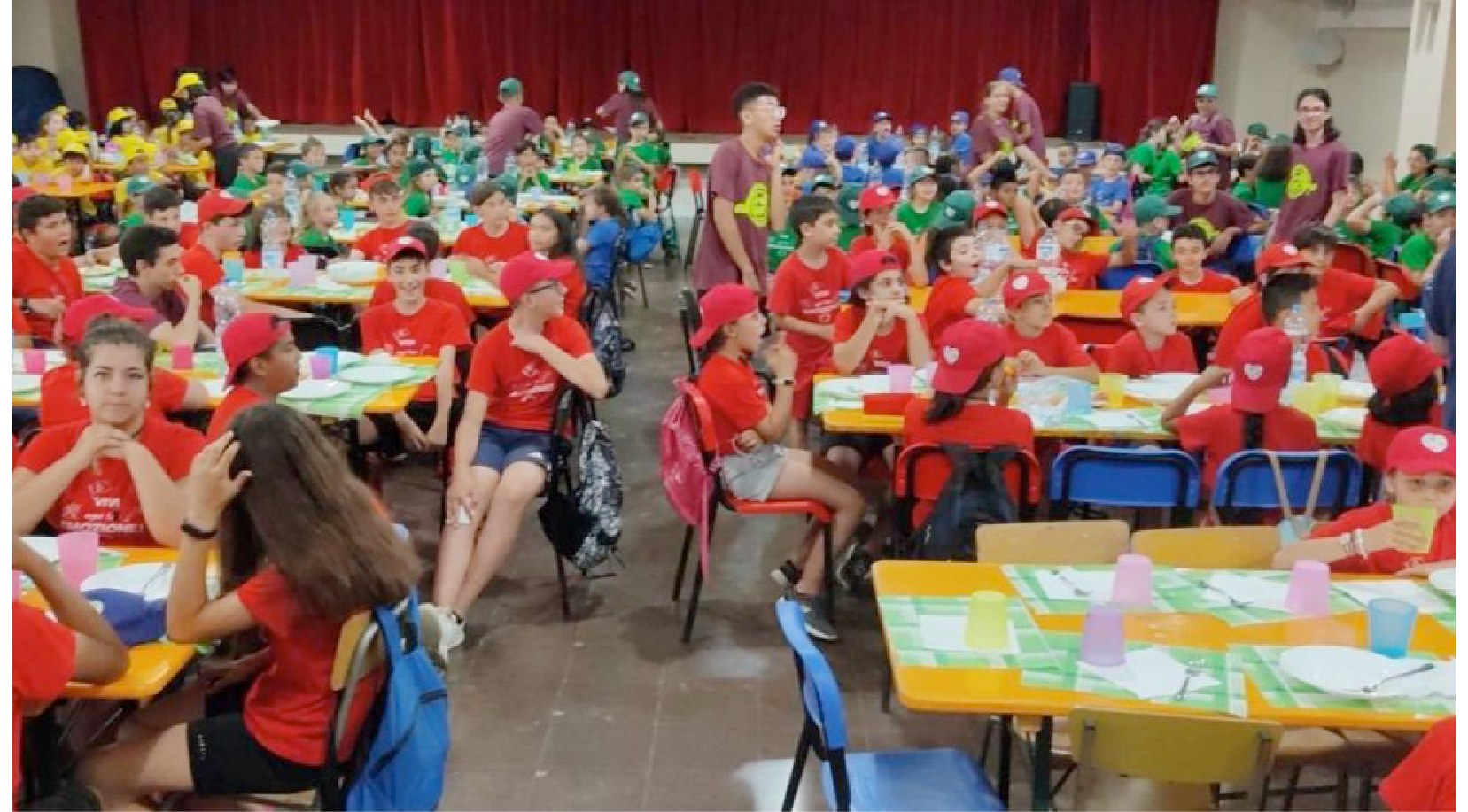
(ZENIT News / Milan, 06.15.2026).- As hundreds of children prepare to attend one of Milan’s largest parish summer programs, a local initiative aimed at accommodating Muslim participants has drawn attention well beyond the city’s Baggio district, highlighting ongoing efforts within parts of the Catholic Church to foster interreligious dialogue while preserving its educational mission.
The initiative comes from the parish of San Giovanni Bosco, where approximately 600 children are expected to participate in this year’s summer oratory activities. Parish priest Father Giovanni Salatino announced that Muslim boys and girls attending the program will have access to a dedicated space where they can gather for Islamic prayer during the day.
According to the priest, the arrangement reflects principles contained in a diocesan document on faith and hospitality published by the Archdiocese of Milan in October 2025. The text encourages Catholic oratories to become places of encounter among people of different religious traditions and presents interreligious dialogue as an important pastoral priority inspired by the Second Vatican Council’s declaration Nostra Aetate.
Although the number of Muslim participants in Baggio is relatively small, Father Salatino said the parish wanted to ensure that they too could experience a moment of prayer. The prayer gatherings will be led by older Muslim youth leaders who already collaborate with the oratory. At the same time, all participants will continue to take part in the common educational activities, including daily reflections based on the life of Saint Francis of Assisi, which serves as this year’s thematic focus.
The priest suggested that the prayer moment could conclude with the Islamic invocation “Bismillah,” which calls upon God as merciful and compassionate. Explaining the initiative, he argued that helping young people pray is always positive and that recognizing the religious identity of others is consistent with the spirit of the Gospel.
The project represents a practical application of the broader vision outlined by the Archdiocese of Milan. The diocesan document describes the oratory as a place capable of welcoming everyone while remaining rooted in its Christian mission. It argues that openness to people of different faiths does not necessarily weaken Christian identity but can become an opportunity for encounter and mutual understanding.
For Father Salatino, the proposal is not entirely new. For nearly two decades he has accompanied young people on visits to Sarajevo, a city often cited for its historical coexistence among different religious communities. Drawing on that experience, he says he feels fully aligned with the diocesan emphasis on dialogue, although he also believes the subject deserves broader discussion among priests and parishes.
The summer camp itself reflects a wider effort by the parish to respond to the needs of local families. Special provisions have been made for children with disabilities, including the presence of a trained educator and volunteers dedicated to supporting their participation and integration. The parish has also strengthened cooperation with local institutions and sports organizations, arranging rugby and basketball workshops for the summer weeks.
The initiative emerges amid broader conversations within the Archdiocese of Milan about relations among religions. In recent months, the archdiocese has attracted attention for projects emphasizing interreligious encounter, including plans for a new monastery complex designed to encourage exchanges among different faith communities.
Thank you for reading our content. If you would like to receive ZENIT’s daily e-mail news, you can subscribe for free through this link.

Publicaciones relacionadas:
 Pakistan: Desperate plea for Catholic man condemned to death
 The Catholic population is falling and the Muslim population is growing… in New Zealand!
 USA: The National Catholic and Muslim Dialogue: “Journeying Together”
 Vienna’s Silent Transformation: Nearly 50% of students in schools are already Muslim. Only 17% are Catholic
