


(ZENIT News / Rome, 06.24.2026).- For decades, declining birth rates have been one of the defining demographic realities of the United States. Yet beneath the broader story of fewer births lies a lesser-known trend that is attracting growing attention among researchers: a widening fertility gap between conservatives and liberals.
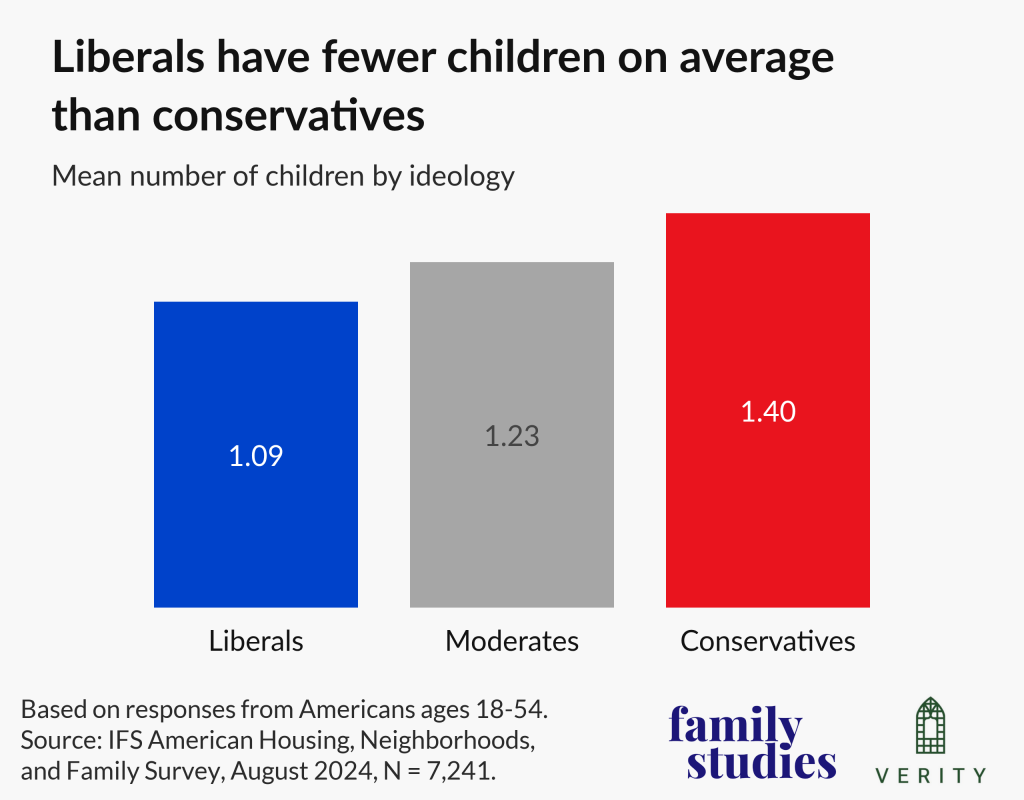
Recent analysis based on a survey of more than 7,000 Americans between the ages of 18 and 54 suggests that political differences may be influencing family formation in ways that go far beyond voting preferences. The findings indicate that conservatives not only have more children than liberals, but also express markedly different attitudes toward parenthood, personal competence, mental health, and the challenges of raising a family.
The numerical gap is significant. Conservative respondents reported an average of 1.40 children, compared with 1.09 among liberals. Likewise, 51 percent of liberals said they had no children, compared with 40 percent of conservatives. Researchers found that these differences remained statistically significant even after accounting for factors such as age, income, race, education, religion, sex, and marital status.
The divergence appears not only in actual fertility but also in family aspirations. When asked how many children they would ideally like to have if circumstances allowed complete freedom of choice, conservatives answered 2.71, moderates 2.43, and liberals 2.16. Researchers note that this ideological gap in desired family size is relatively recent, becoming clearly visible only during the last few decades.
What makes the study particularly noteworthy is its attempt to explore why these differences exist.
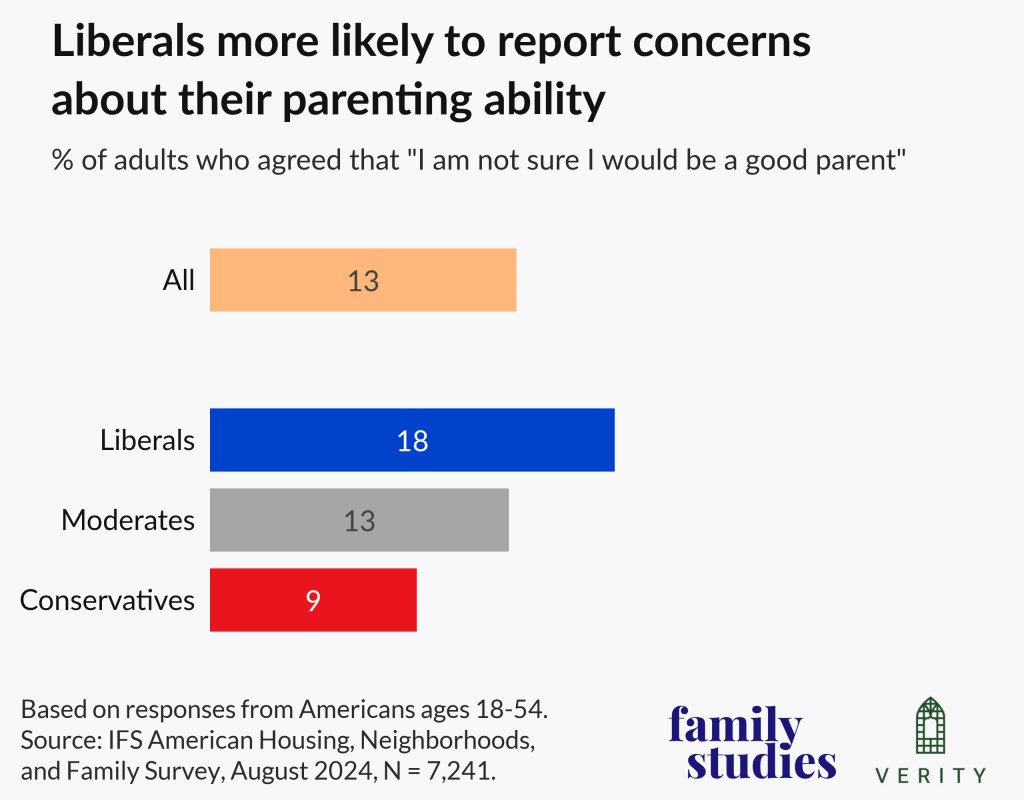
One of the strongest findings concerns confidence in parenting. Liberals were twice as likely as conservatives to express uncertainty about whether they would be good parents. Eighteen percent of liberals reported such doubts, compared with only 9 percent of conservatives. More importantly, these concerns were strongly associated with lower fertility. Individuals uncertain about their ability to be good parents reported an average of just 0.50 children, compared with 1.35 among those who felt confident in their parenting abilities.
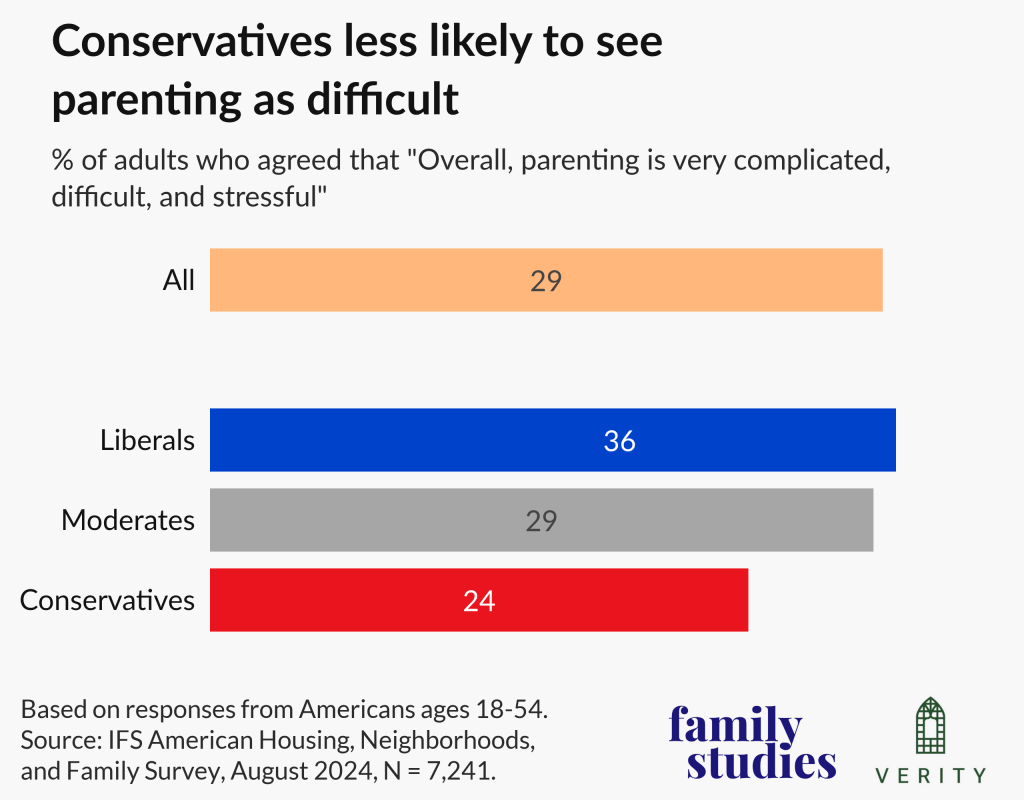
Researchers also identified contrasting perceptions of family life itself. More than one-third of liberals, 36 percent, described childrearing as extremely difficult and stressful, while only 24 percent of conservatives shared that assessment. Those who viewed parenting in these terms tended to have substantially fewer children than those who did not.
Mental health concerns emerged as another important factor. Approximately one in seven respondents agreed with the statement that their mental health was not good enough for them to have children at the present time. Those expressing this concern averaged only 0.84 children, compared with 1.30 among those who disagreed. Liberals were nearly twice as likely as conservatives to cite mental health as a reason for delaying or avoiding parenthood.
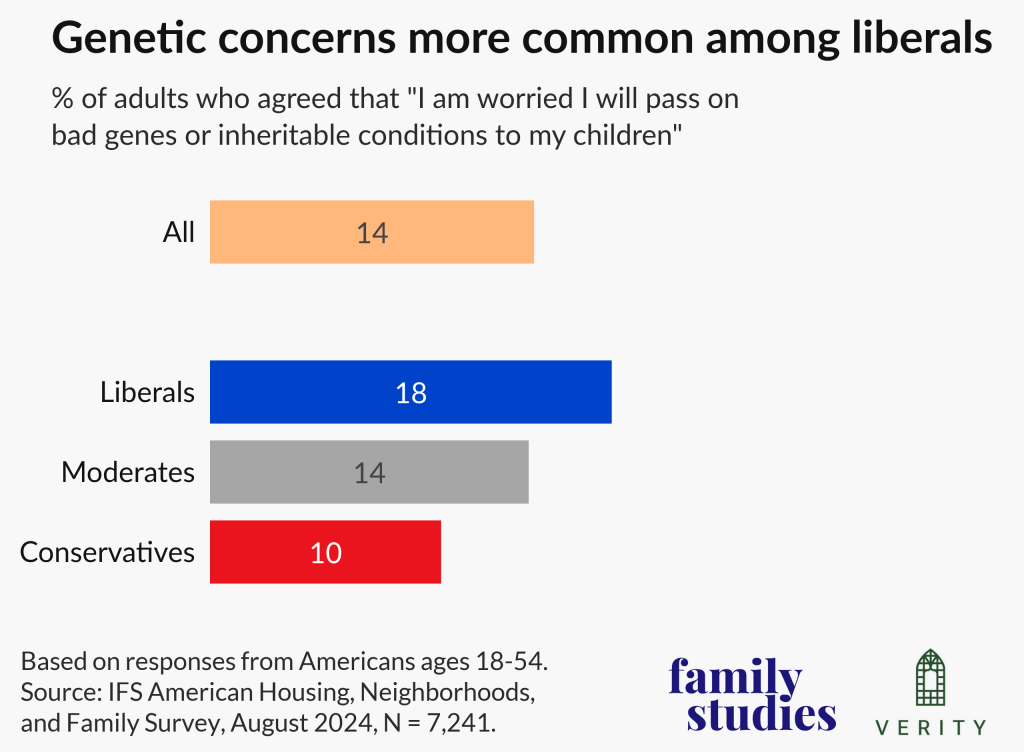
Similarly, worries about passing on hereditary diseases or genetic conditions were more common among liberals. Eighteen percent expressed such concerns, compared with 10 percent of conservatives. Individuals who reported anxiety about transmitting genetic disorders had, on average, 32 percent fewer children than those who did not share that fear.
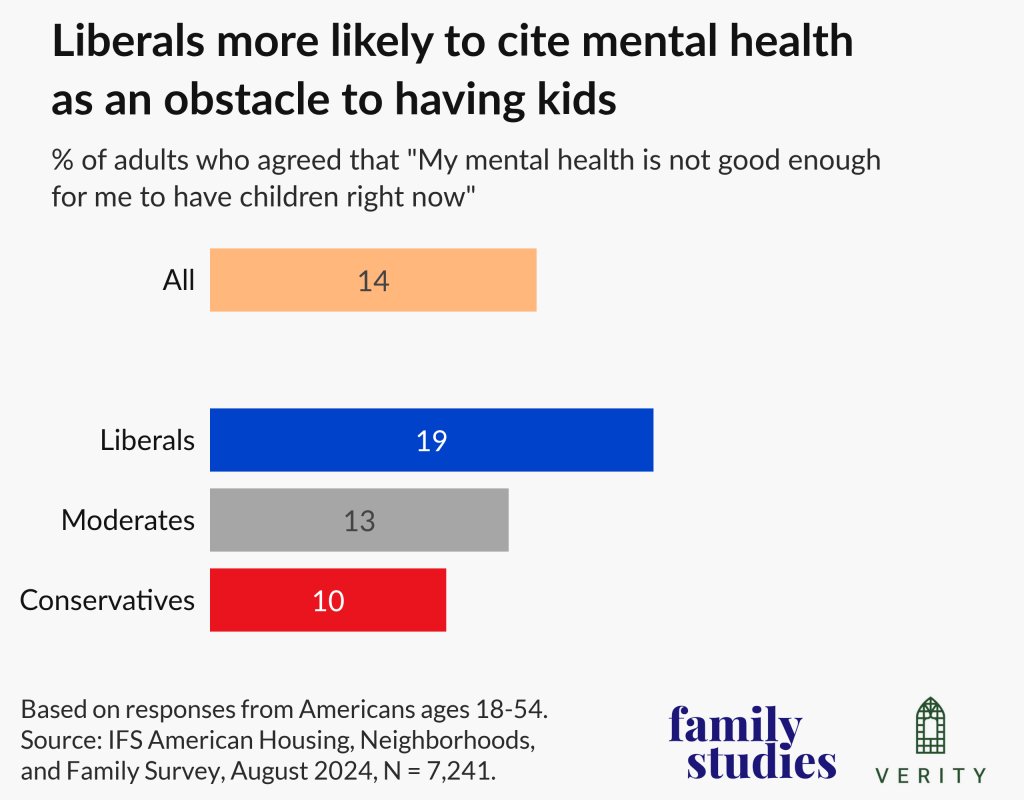
The findings point toward an intriguing conclusion. The fertility gap may be influenced not merely by economic conditions or religious differences, but also by contrasting perceptions of parenthood itself. Conservatives appear more likely to view family formation as an achievable and worthwhile undertaking, while liberals more frequently express reservations related to stress, competence, mental health, or genetic risks.
At the same time, the researchers urge caution. The study identifies correlations, not causes. It remains unclear whether political ideology shapes these attitudes and ultimately affects fertility decisions, or whether people who already possess these views are more likely to identify with a particular political outlook. The direction of causality remains unresolved.
For observers concerned about America’s demographic future, however, the study raises important questions. Public debate often focuses on housing costs, childcare expenses, or economic uncertainty as explanations for declining birth rates. While these factors undoubtedly matter, the survey suggests that cultural attitudes, personal confidence, and competing visions of family life may be equally important parts of the story.
Thank you for reading our content. If you would like to receive ZENIT’s daily e-mail news, you can subscribe for free through this link.

Publicaciones relacionadas:
 Trump Begins Shock and Awe Overhaul at USAID
 Surprising study shows birth projections for 2026: only 8 out of every 100 babies will be born on three continents combined
 Planned Parenthood: The “Non-Profit” Organization with Million- Dollar Fees
 UN Uses AI to Target Adolescents on Controversial Issues
