

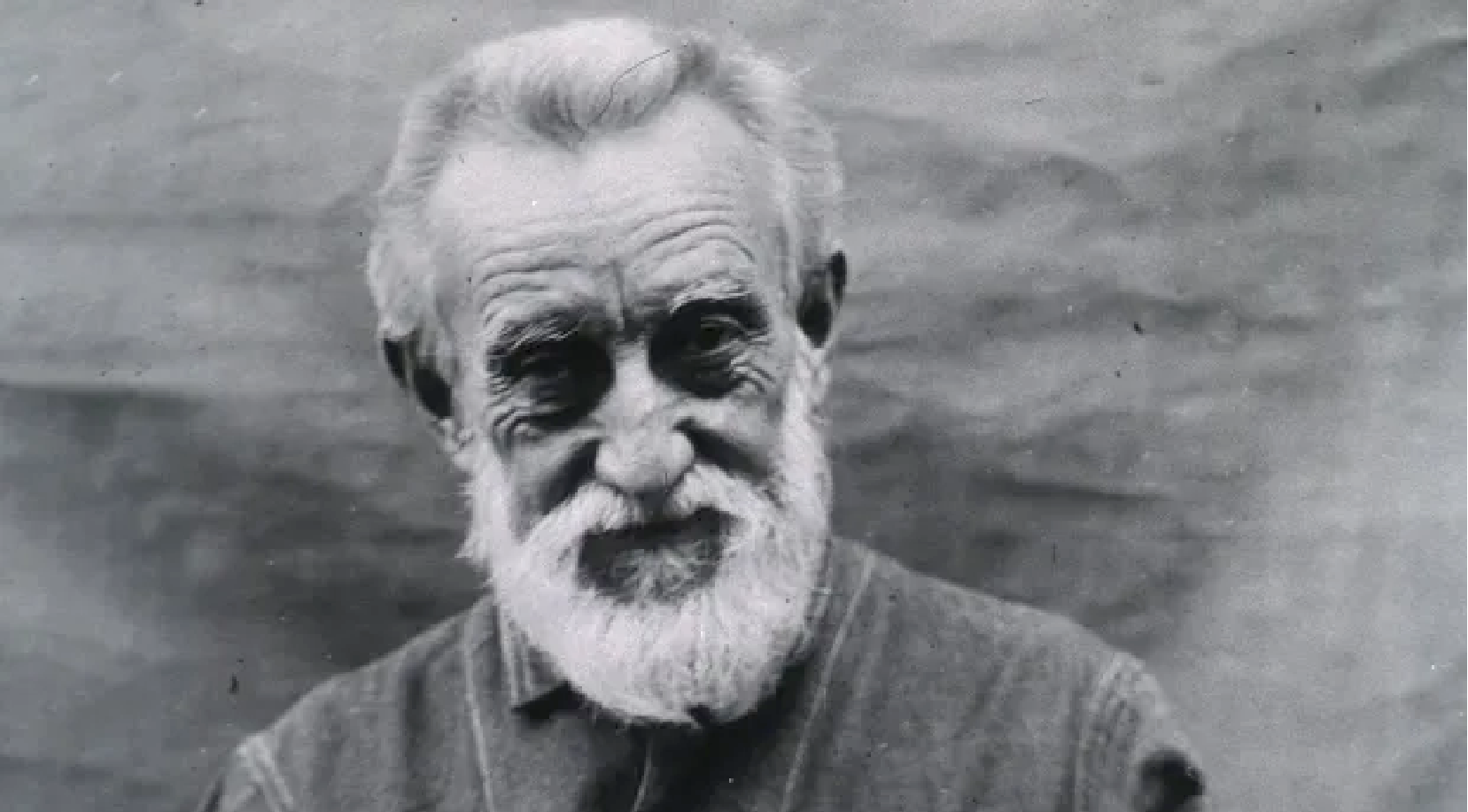
(ZENIT News / Honolulu, 05.04.2026).- The state of Hawaii has chosen to formally recognize one of the protagonists of its religious history. Governor Josh Green has signed legislation establishing an annual “Brother Joseph Dutton Day,” to be observed each April 27, bringing renewed attention to a man whose life of service unfolded largely in the shadow of more widely known figures.
Hawaii’s Catholic legacy is often associated with towering names such as the Belgian missionary who ministered to leprosy patients on Molokai or the Franciscan sister who later continued that work. Yet Joseph Dutton—today recognized by the Church with the title “Servant of God,” the first step in the canonization process—played an indispensable role in that same mission. His contribution, though less celebrated, was no less decisive.
Born on April 27, 1843, in Vermont, Dutton’s early life followed a trajectory not uncommon in 19th-century America. His family later moved to Wisconsin, and he served in the Civil War as part of the 13th Wisconsin Infantry Regiment. But the defining turn in his life came decades later, through a profound spiritual reawakening. Having drifted away from religious practice, he encountered Catholicism through personal relationships and study. On April 27, 1883—his 40th birthday—he was received into the Catholic Church, marking what he would later understand as a second birth. He took the name Joseph, inspired by the foster father of Christ, and resolved to dedicate his life to service.
This decision eventually led him across the Pacific. Drawn by reports of the work being carried out among those suffering from leprosy in Hawaii, Dutton joined the mission and became a close collaborator and assistant to the priest who had already become a symbol of sacrificial charity. For decades, Dutton shared in the daily hardships of life among the afflicted: caring for the sick, managing practical needs, and embodying a quiet, persevering compassion.
He remained in Hawaii for the rest of his life, dying on March 26, 1931, after years of service marked not by public acclaim but by steadfast fidelity. It is telling that the state chose not the date of his death, but April 27, to commemorate him—a day that encapsulates both his natural birth and his spiritual rebirth, the latter being the turning point that gave his life its enduring meaning.
In signing the law, Governor Green emphasized that Dutton’s life offers a compelling model of humility and generosity. The decision reflects more than a historical acknowledgment; it signals a recognition that the moral fabric of a society is often shaped by figures who operate far from the spotlight.
Thank you for reading our content. If you would like to receive ZENIT’s daily e-mail news, you can subscribe for free through this link.

Publicaciones relacionadas:
 Barcelona: Antonio Gaudí’s Beatification Process Advances
 Vincent, the boy alive thanks to a miracle attributed to Cardinal George Pell
 From Christopher Columbus to Mother Cabrini: The patron saint of migrants wins the vote for a statue in Chicago
 Palestinian president announces investment in restoration of Jesus Christ’s birthplace
