

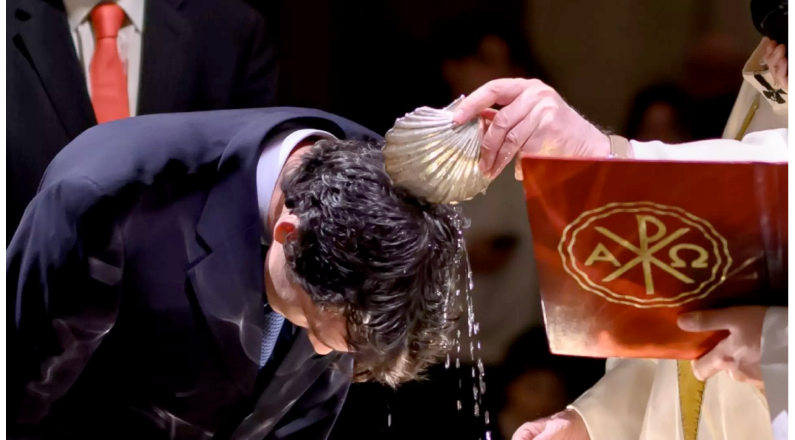
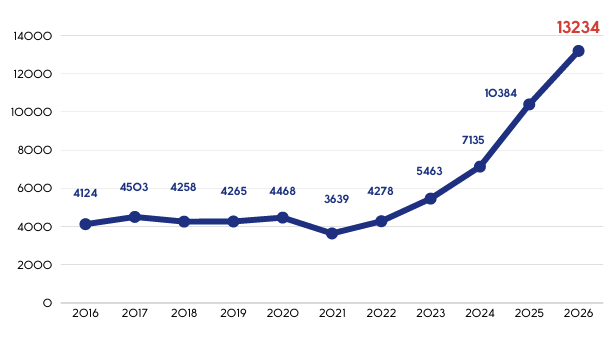
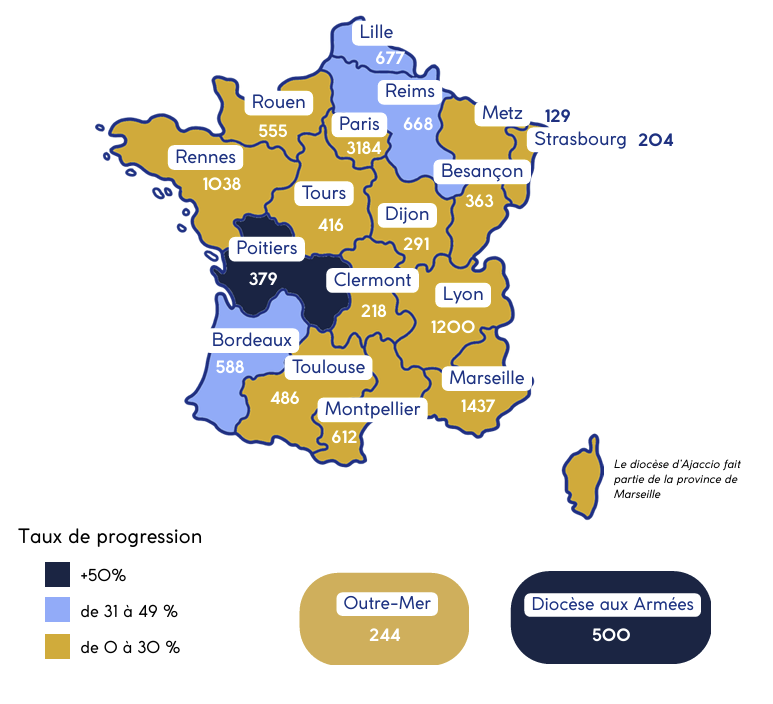
(ZENIT News / Paris, 05.05.2026).- According to figures released by the Catholic Church in France, 13,234 adults were baptized during the Easter Vigil in 2026. This represents a 28 percent increase compared to the previous year and marks a striking long-term trend: in just a decade, the number of adult baptisms has more than tripled, rising from 4,124 in 2016.
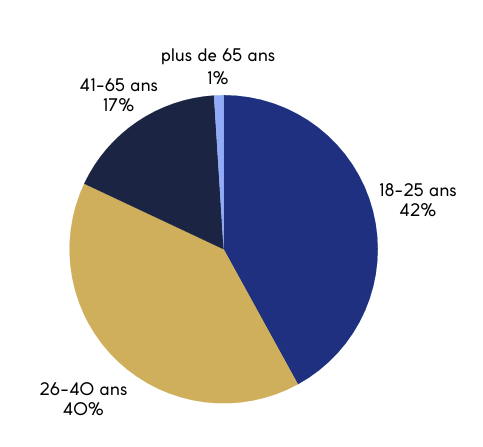
What is particularly notable is the profile of these new Catholics. Far from being a marginal or aging demographic, 42 percent of adult catechumens are between 18 and 25 years old. Women continue to represent a majority—around 62 percent—while approximately one quarter of candidates are students. Although most come from urban environments, rural areas have also seen a steady presence of new converts.
This resurgence is occurring in a country where traditional religious practice has dramatically eroded. In 1961, roughly 35 percent of the population attended Sunday Mass; today, that figure is estimated at just 5 percent. The decline is equally visible in the clergy: from approximately 65,000 priests in the early 1960s to about 12,000 today, with fewer than 7,000 in active ministry. Many priests now oversee multiple parishes, stretching already limited pastoral resources.
Yet the current moment cannot be explained simply as a statistical anomaly. Clergy and observers point to deeper cultural dynamics. Father Matthieu Raffray, a priest with a strong digital presence, has become emblematic of a new form of evangelization. Through platforms such as YouTube, Instagram, and TikTok, he reaches more than 330,000 followers—many of them young people with little prior exposure to Christianity. Other content creators, including younger voices from Generation Z, are similarly contributing to a renewed visibility of the faith in the digital sphere.
Their influence appears to be more than superficial. Testimonies from recent converts often describe a gradual process that begins online and culminates in a personal encounter with the Church. One such case involves a 27-year-old engineer who, after growing up without religious formation and identifying as atheist, encountered Catholic teaching through social media during a period of personal difficulty. His journey led him not only to daily Mass attendance but eventually to enter the seminary. His conversion also prompted a return to religious practice within his own family.
These individual stories reflect a broader pattern. Around 40 percent of newly baptized adults report that their path to faith was triggered by a significant life event, such as illness, loss, or existential crisis. In a society where institutional religion is often perceived as distant or outdated, such moments appear to reopen fundamental questions about meaning, suffering, and hope.
At the same time, the legal and cultural framework of French secularism continues to shape the environment in which this revival is taking place. The model of laïcité, established in 1905, strictly limits religious expression in public institutions. Critics, including political scientist Olivier Roy, argue that this has contributed to the marginalization of religion from public life, particularly affecting younger generations who often grow up with minimal contact with religious traditions.
Paradoxically, it is precisely within this context of absence that a renewed interest seems to be emerging. Archbishop Olivier de Germay recently described the rise in baptisms as a sign of vitality, noting that what was once considered outdated now appears to answer a growing spiritual hunger.
The phenomenon extends beyond adults. In 2026, 8,100 adolescents they were baptized across 89 dioceses, representing about 90 percent of the total diocesan landscape. Although growth in this group has slowed to around 10 percent annually, the numbers remain significant. The gender distribution mirrors that of adults, with approximately 65 percent female and 35 percent male.
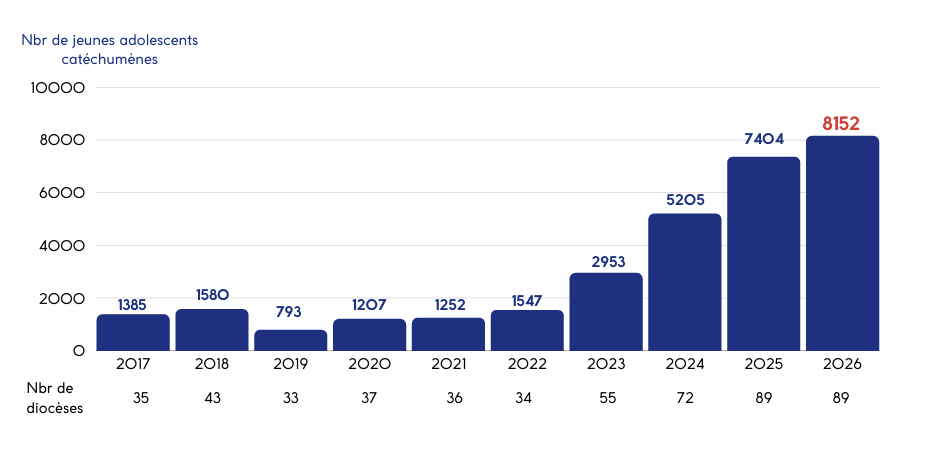
These young catechumens follow a formation process adapted from the Rite of Christian Initiation of Adults, participating in key milestones such as the Rite of Election at the beginning of Lent. Increasingly, dioceses are organizing these celebrations on a larger scale, reinforcing the sense of belonging to a wider ecclesial community.
However, this unexpected growth also presents concrete challenges. The shortage of priests complicates the task of providing adequate catechesis and spiritual accompaniment. Parishes must also reconsider traditional structures, including the role of sponsors, as the number of candidates continues to rise. In many places, what was once a one-to-one mentoring model is being rethought to accommodate larger groups.
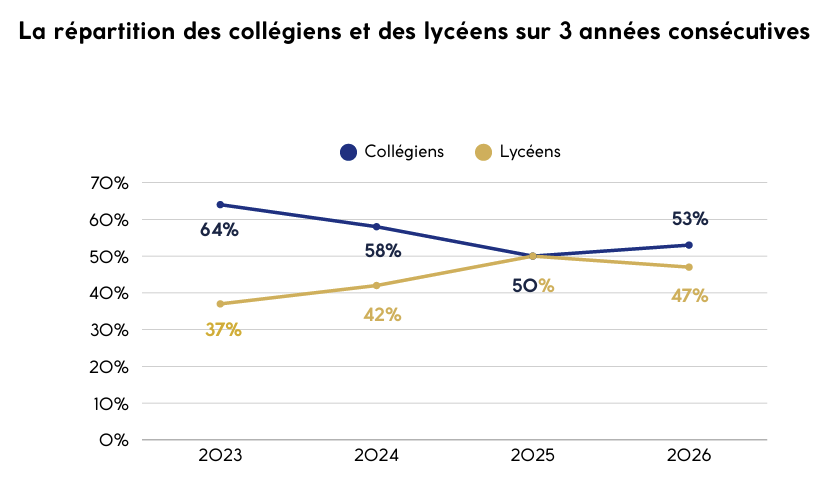
The French case illustrates a broader question facing the Church in the West: how to respond when secularization and spiritual searching coexist. The data suggest that, even in a society where religious practice has diminished sharply, the deeper questions of human existence remain unresolved.
Thank you for reading our content. If you would like to receive ZENIT’s daily e-mail news, you can subscribe for free through this link.

Publicaciones relacionadas:
 Germany: Study Shows That Young Muslims Believe More in God Than Catholics
 Surprising research data among French clergy: the younger they are, the more conservative… and happy they are
 Mass Attendance Boom: The Case of the US Diocese of Bridgeport
 Beyond emotion: Spanish bishops publish a critique of the emotionalism of spiritual retreats
