

R. Cavanaugh
(ZENIT News – Persecution.org / Pakistan, 06.25.2026).- Using blasphemy accusations as a weapon is nothing new in Pakistan. The situation now goes beyond that.
Members of a growing organized blasphemy business network are actively trying to trap people into committing “blasphemy” on social media.
Some Pakistani officials, including members of the country’s Federal Investigation Agency (FIA), freelance on behalf of the blasphemy network. Using their law enforcement power, they conduct arrests that are essentially kidnappings.
The main purpose here is to extort bribes from the target in exchange for dropping criminal charges. In the custody of such people, the treatment is appalling. At least several cases have seen the abuse turn fatal.
No demographic in Pakistan is safe from for-profit blasphemy accusations. But religious minorities — Christians, Hindus, and certain sects within Islam deemed heretical — are at increased risk.
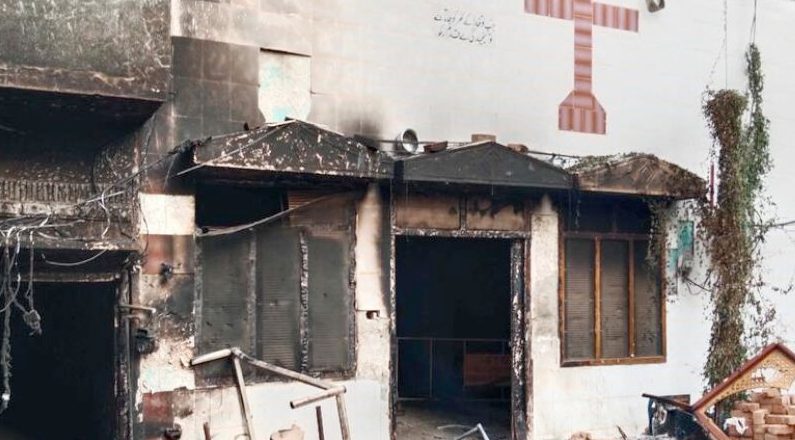
Blasphemy accusations against a religious minority can become so volatile that everyone from the accused person’s community has to flee from their homes. Some mob attacks can destroy dozens of homes at once.
When trying to communicate about this issue with Christians inside Pakistan, their sense of paranoia is palpable. They might tell you, “The questions you are asking are very sensitive.” They might also talk about someone “building a case” against them.
Even if they see the face of a Westerner on the other side of a WhatsApp video chat, they might decide it is too risky to communicate about such matters.
It’s understandable. And the more you learn about this issue, the more understandable it becomes.
“Simon,” a Pakistani Christian, confirmed that most blasphemy accusations these days pertain to alleged behavior on social media platforms.
He said some people stalk Pakistani religious minorities online and bait them into saying something that could be construed as blasphemous. “If they target someone, then they try to find any loophole in their [social media] posts that can be exploited,” he added.
Someone with bad intentions may start a dialogue online with a person in Pakistan and reveal a personal detail to build an atmosphere of trust before steering the conversation toward faith, before finally touching on the country’s dominant religion.
At this point, if the target says even one thing that might be regarded as critical, mocking, or theologically controversial, then he’s in big trouble. Just take a screenshot of the “offending” message, and you have indestructible evidence.
Now you can start extorting him. Or have a few select officials visit him. If the target stays defiant in the face of such pressure, then leak the screenshot to his employer, his family, and, of course, the local imams and activists — they’ll gladly handle it from there, with layers of institutional support behind them.
In many cases, the victim might not personally make any comment at all. Instead, they are enticed to join a Facebook or WhatsApp chat or group where blasphemous material is shared.
One common method is to have a photogenic female — or someone using a photogenic female profile pic — search for young men on WhatsApp and persuade them to join a particular WhatsApp group.
In some cases, the target joins a WhatsApp group and is promptly given administrative privileges. Then the preexisting group administrator exits, leaving the new guy as an administrator of a “blasphemous” group whose content he didn’t even know about.
The previous administrator then takes the necessary screenshots and reaches out to other members of the blasphemy network. Now the victim’s life faces ruin due to blasphemous material he did not ask for and most likely did not even want to see.
Pakistan’s blasphemy business network started in the city of Rawalpindi and the capital of Islamabad, but has since expanded across much of the country. Aside from connections to Pakistani officials, the network also has connections to prominent Islamic religious scholars.
At blasphemy trials in Pakistan, mobs often surround courthouses to make sure that judges issue the “correct” ruling.
It seems many of these mob participants are motivated more by profit than spiritual indignation. This motivation became clear during disputes between mob organizers and participants who were not paid for their services.
Simon said that, in recent years, many of the individuals behind blasphemy accusations and the related mobs are associated with the hardline Islamic group Tehreek-e-Labbaik Pakistan (TLP). Since its establishment in 2015, TLP has been pushing for Pakistan to use its blasphemy laws more forcefully.
Evidently, at least some Pakistani officials want to address the rampant abuse of blasphemy accusations in their country. In January 2024, a special branch inspector in Pakistan’s Punjab province emerged with a special report, “The Blasphemy Business,” which spoke to a coordinated network of people seeking to profit from Pakistan’s blasphemy laws.
It seems, however, there is considerable government opposition to pursuing this matter: In July 2025, the Islamabad High Court ordered Pakistan’s federal government to form a commission to investigate the abuse of the country’s blasphemy laws. And about one week later, this order was suspended.
Simon said he believes that Pakistan’s current federal government wants this situation to stop. “But sometimes the social pressure gets the better of you,” he added.
There is abundant “social pressure” these days: The number of blasphemy cases in 2024 increased by a factor of almost 50 times since 2020. It’s impossible to know for sure how much the rate has increased regarding persons being extorted and menaced under the threat of filing a case. But it’s safe to assume that the rate has also risen.
Blasphemy has become its own business sector in Pakistan. And business is good.
Thank you for reading our content. If you would like to receive ZENIT’s daily e-mail news, you can subscribe for free through this link.

Publicaciones relacionadas:
 Poignant: Was the Departure of Mother Teresa’s Nuns, Expelled from Nicaragua by Daniel Ortega’s Regime
 Nicaragua will be left without nuns and religious: government expels them all and sets date for their departure
 Global Christian Persecution Reaches New Heights Amid Rising Nationalism, Conflict, and Repression
 Colombian President Harasses Catholic Priest Live on Air for Speaking Out Against Communism
