

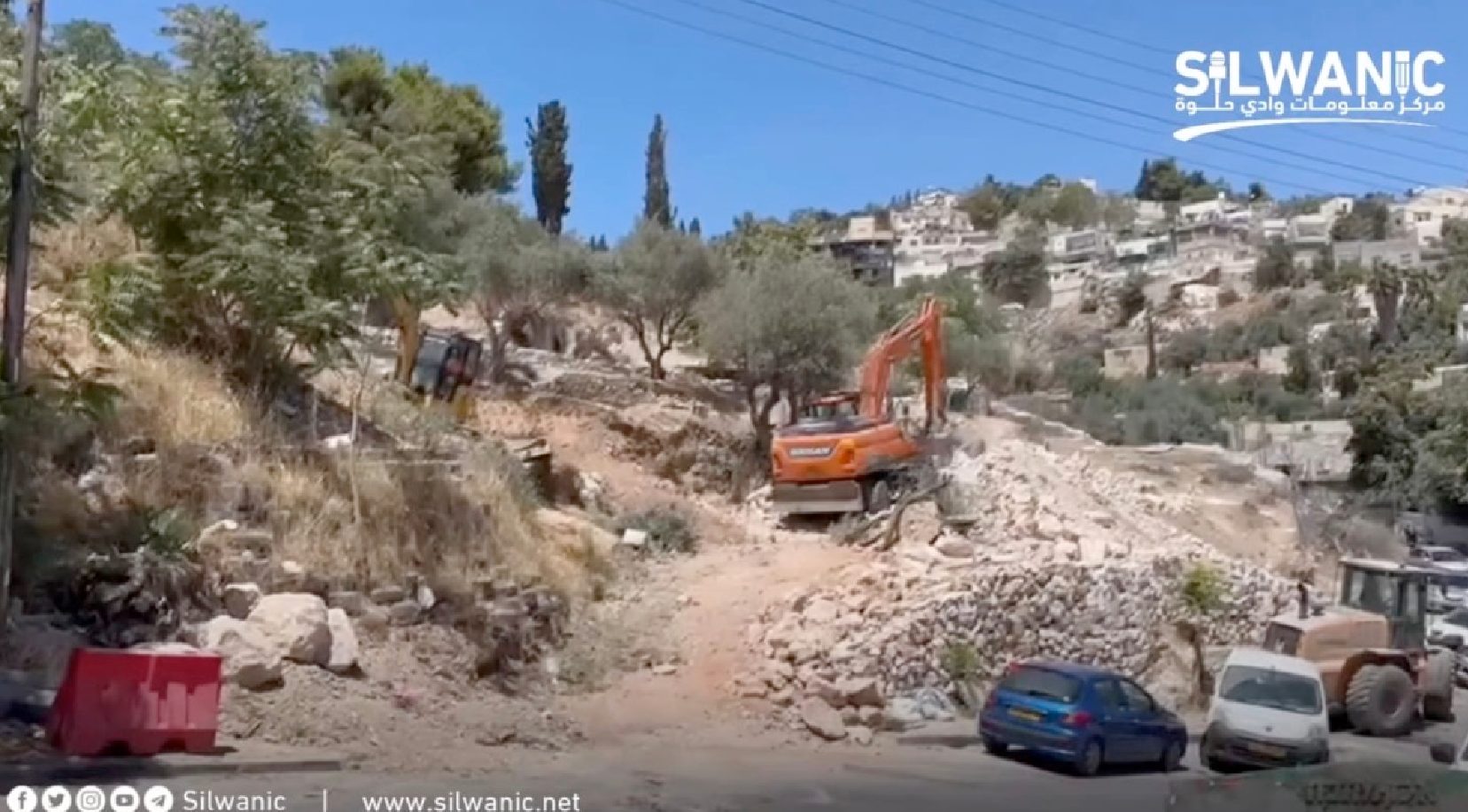
(ZENIT News / Jerusalem, 06.18.2026).- Two developments separated by only a few days have reignited concerns about the future of religious heritage and the fragile status quo surrounding holy places in Jerusalem and the West Bank. While the Greek Orthodox Patriarchate of Jerusalem denounced what it described as the unlawful seizure of Church-owned land in Silwan, Israeli authorities simultaneously moved to expand their direct control over parts of Hebron linked to one of the most revered sites in biblical history.
Taken together, the events have intensified anxieties among Christian and Muslim leaders who fear that longstanding arrangements governing sacred places are entering a period of growing uncertainty.
The first controversy erupted in East Jerusalem, where the Greek Orthodox Patriarchate accused Israeli authorities of forcibly taking control of Church property in Silwan on June 15. According to the Patriarchate, representatives were removed from the site, equipment was confiscated, trees were uprooted, and the area was enclosed with fences and gates.
Church officials insist the land is legally registered under the Patriarchate’s name and forms part of a historic area adjacent to an ancient monastery. They argue that the action cannot be justified by a municipal landscaping order that expired in 2024 and warn that the incident establishes a troubling precedent for Christian property rights in Jerusalem.
The Patriarchate framed the dispute within a broader context, expressing alarm over what it sees as increasing pressure on the indigenous Christian presence in the Holy Land. Church leaders pointed to reports documenting 111 incidents targeting Christian clergy, faithful, institutions, or religious symbols during 2024, including 35 attacks directed specifically at churches, monasteries, and sacred sites.
The statement also recalled previous attacks affecting Christian communities during the ongoing regional conflicts, including the deadly strike on the compound of Saint Porphyrius Church in Gaza in October 2023 and the attack on the Holy Family Church in July 2025, which killed three civilians and injured parish priest Father Gabriel Romanelli.
For the Patriarchate, the issue extends beyond a property dispute. Church officials argue that respect for religious heritage, legal ownership, and freedom of worship forms part of the foundation for any lasting peace in Jerusalem, a city sacred to Jews, Christians, and Muslims alike.
Meanwhile, another dispute unfolded roughly 30 kilometers to the south in Hebron, one of the oldest continuously inhabited cities in the world and a focal point of Israeli-Palestinian tensions.
Israeli Finance Minister Bezalel Smotrich announced what he described as the end of key provisions of the Hebron Protocol, a component of the Oslo-era agreements signed in 1997. Although Israel’s Foreign Ministry quickly clarified that the entire accord remains in force, the government confirmed changes affecting planning and construction authority in areas connected to the Jewish community and historic religious sites.
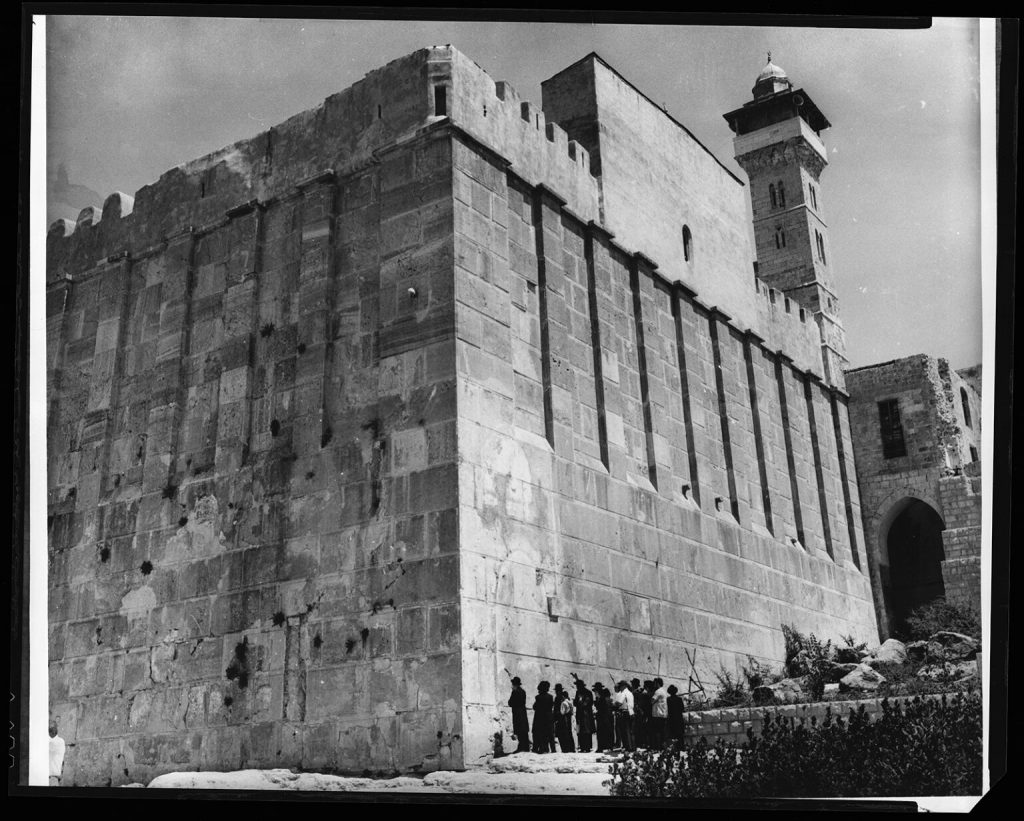
Jews pray outside the walls of the Ibrahimi Mosque in Hebron, Israeli-occupied West Bank, in 1980. The structure, also called the Cave of the Patriarchs, is believed to contain the remains of the mutual tribal ancestors of Muslims and Jews–Abraham, Isaac, Jacob and their wives. RNS archive photo. Photo courtesy of the Presbyterian Historical Society.
At the center of the controversy stands the Cave of the Patriarchs, known to Muslims as the Ibrahimi Mosque. The site occupies a unique place in the religious imagination of billions of believers. According to biblical tradition, Abraham purchased the burial cave and was laid to rest there alongside Isaac, Jacob, Sarah, Rebecca, and Leah. For Jews it is second in holiness only to the Temple Mount; for Muslims it is among the most revered sanctuaries in Palestine.
The new arrangements grant Israeli authorities greater control over planning and infrastructure related to the Jewish community in Hebron and surrounding sacred locations. Israeli officials argue that the changes are administrative in nature and necessary because of years of non-cooperation from local Palestinian authorities. Representatives of the Jewish community welcomed the move, describing it as a historic correction that will allow long-delayed construction projects and improvements to proceed.
Palestinian leaders see the matter very differently. Hebron Mayor Youssef Aljabar warned that unilateral alterations to the protocol risk destabilizing an already volatile city. The Palestinian Authority condemned the decision as a violation of previous agreements and international law, while the Organization of Islamic Cooperation accused Israel of undermining the site’s legal and historical status.
The stakes are particularly high because Hebron remains one of the most sensitive flashpoints in the Israeli-Palestinian conflict. More than 200,000 Palestinians live in the city, alongside a small Jewish community of roughly 700 residents concentrated near the Old City and the Cave of the Patriarchs. Under existing arrangements, approximately 20 percent of Hebron remains under Israeli security control.
Beyond the immediate political dispute lies a deeper question that concerns religious communities across the region. Custodianship of holy places has long depended on delicate agreements, some of which date back decades or even centuries. Recent reports regarding the future administration of other sacred sites, including Jerusalem’s Temple Mount and the Church of the Holy Sepulchre, have heightened fears that these arrangements may face increasing pressure.
For Christians, the developments in Silwan are particularly troubling because they touch on a community that has steadily declined in numbers throughout the Holy Land. For Muslims, the changes in Hebron raise concerns about access, worship rights, and the preservation of historical agreements. For Jews, the debate involves questions of heritage, security, and the connection to places central to biblical history.
As competing narratives continue to collide, one reality remains evident: in the Holy Land, disputes over land are rarely only about land. They are often intertwined with faith, identity, memory, and the future of communities whose roots reach back to the earliest chapters of sacred history. The challenge facing political and religious leaders alike is whether these treasured sites can remain places of prayer rather than become symbols of ever-deeper division.
Thank you for reading our content. If you would like to receive ZENIT’s daily e-mail news, you can subscribe for free through this link.

Publicaciones relacionadas:
 Pope Francis Breaks His Silence on Nicaragua and Speaks Out Clearly from Saint Peter’s Square in the Vatican
 Haiti: Second kidnapped priest released
 London: Call for justice presented at 10 Downing Street
 Nicaragua will be left without nuns and religious: government expels them all and sets date for their departure
