

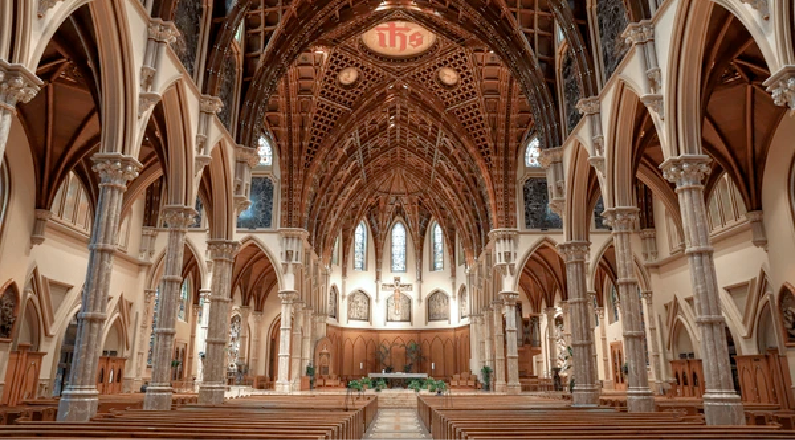
(ZENIT News / Chicago, 06.19.2026).- A court decision in Illinois has opened an unexpected new chapter in the long and painful history of the Catholic Church’s abuse crisis in the United States. While dioceses have spent decades confronting legitimate allegations, compensating victims, and reforming safeguarding policies, the Archdiocese of Chicago is now pursuing a different battle: a lawsuit alleging that an organized network deliberately fabricated abuse claims for financial gain.
The case, which a judge recently allowed to proceed, has drawn attention not only because of its extraordinary allegations but also because it touches on a delicate question facing many institutions today: how to support genuine victims while guarding against fraudulent claims that can undermine confidence in the justice process.
The lawsuit was filed by the Archdiocese of Chicago in response to claims linked to former priest Daniel McCormack, one of the most notorious clerical abusers in the city’s recent history. McCormack was removed from the priesthood after being convicted of sexually abusing minors, and numerous victims have received compensation over the years.
According to the archdiocese, however, a separate group of more than two dozen individuals allegedly exploited McCormack’s notoriety by creating a coordinated scheme designed to obtain settlements through false accusations. Court filings claim that participants recruited additional individuals, coached them on how to present allegations, and shared portions of the compensation obtained.
The archdiocese alleges that the operation functioned for years and involved individuals with criminal backgrounds, including gang members and convicted offenders. The alleged scheme reportedly came to light after a recorded prison telephone conversation surfaced in which one participant allegedly described false accusations as a source of «easy money.»
A judge’s refusal to dismiss the case does not determine the truth of the allegations, but it allows the archdiocese to continue presenting evidence and pursuing its claims in court.
Cardinal Blase Cupich welcomed the ruling, arguing that fraudulent accusations ultimately harm the very people the Church seeks to protect.
His concern reflects a challenge that has emerged as dioceses attempt to address historical abuse cases. In recent decades, Church leaders in the United States have increasingly adopted a pastoral approach that encourages survivors to come forward, seeks to avoid retraumatizing victims, and often favors settlement over prolonged litigation. According to Chicago officials, the alleged fraudsters exploited precisely that culture of trust and compassion.
The archdiocese maintains that defending itself against claims it believes are knowingly false is not inconsistent with supporting authentic victims. On the contrary, Church officials argue that fabricated allegations can dilute resources, complicate investigations, and cast doubt on the credibility of survivors whose suffering is real.
The financial dimension of the issue is significant. Over the past several decades, the Archdiocese of Chicago has paid more than $400 million to survivors of clerical sexual abuse. Those payments form part of a broader national effort by Catholic dioceses to acknowledge wrongdoing, provide compensation, and fund healing initiatives.
At the same time, Church leaders report a sharp increase in claims involving events allegedly dating back many decades. Cardinal Cupich recently pointed to what he described as a changing legal environment, including extensive advertising by law firms and the growing involvement of private investment capital in abuse-related litigation.
Such developments are not unique to Chicago. Across the United States, legislative changes have expanded opportunities for historical abuse claims. Several states have enacted «look-back windows» or other exceptions to statutes of limitations, allowing alleged victims to pursue legal action even when claims involve events from many years ago.
These measures were widely welcomed by survivors’ advocates because many abuse victims require years, sometimes decades, before feeling able to report what happened to them. Yet critics have argued that the passage of time can also make it more difficult to verify facts, locate witnesses, and ensure due process.
That debate has become increasingly relevant within the Church itself. In recent years, some canon lawyers and clergy advocates have warned that the understandable desire to support victims should not eliminate fundamental protections for the accused, especially in cases where evidence may be limited by the passage of decades.
The issue gained renewed attention this month when the United States Conference of Catholic Bishops voted to strengthen language in its Charter for the Protection of Children and Young People concerning due process and the legal and canonical rights of accused clergy.
For many observers, the Chicago case illustrates the complexity of the post-abuse-crisis era. Few dispute the devastating reality of clerical abuse or the Church’s failures in confronting it. At the same time, the pursuit of justice requires both compassion for victims and a commitment to truth.
Thank you for reading our content. If you would like to receive ZENIT’s daily e-mail news, you can subscribe for free through this link.

Publicaciones relacionadas:
 Rupnik Case: Jesuits Invite to Denounce and Make Known Their Structure to Handle Complaints
 Knights of Columbus decide to cover Rupnik mosaics at John Paul II National Shrine
 Study Reveals Record Drop in Cases of Abuse in the Ecclesial Realm in Australia
 Archdiocese of Chicago brings alleged fraudsters who allegedly posed as abuse victims to trial
